
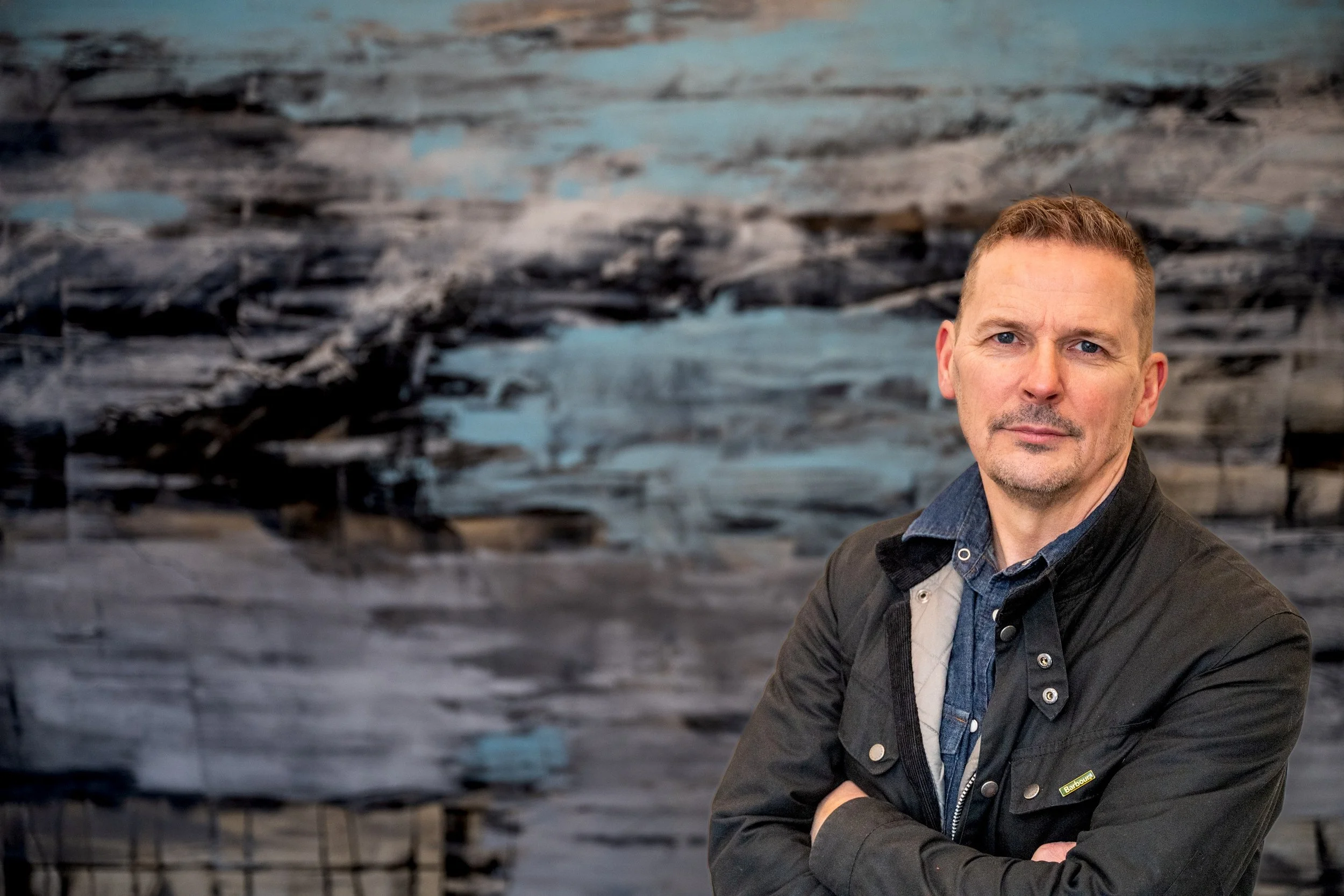
Profile - Sean Cotter
“My work exists somewhere between what I’ve seen and what is threatened, lost or evocative of what was”
At A Glance
Acclaimed Irish artist, NCAD graduate, scuba diver, fireman and more, grasping the opportunity to return to and spend more time on his life’s passion.
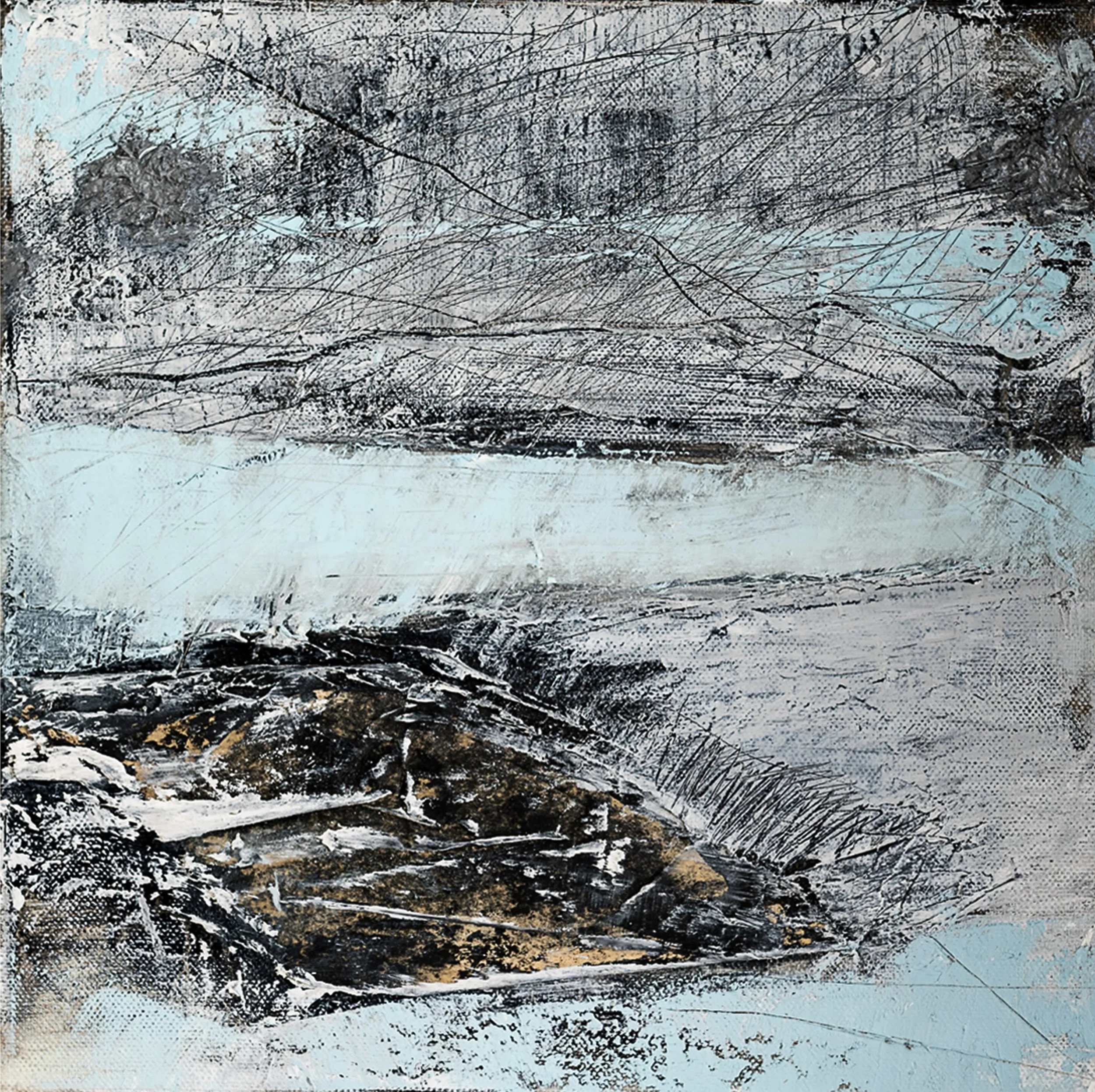
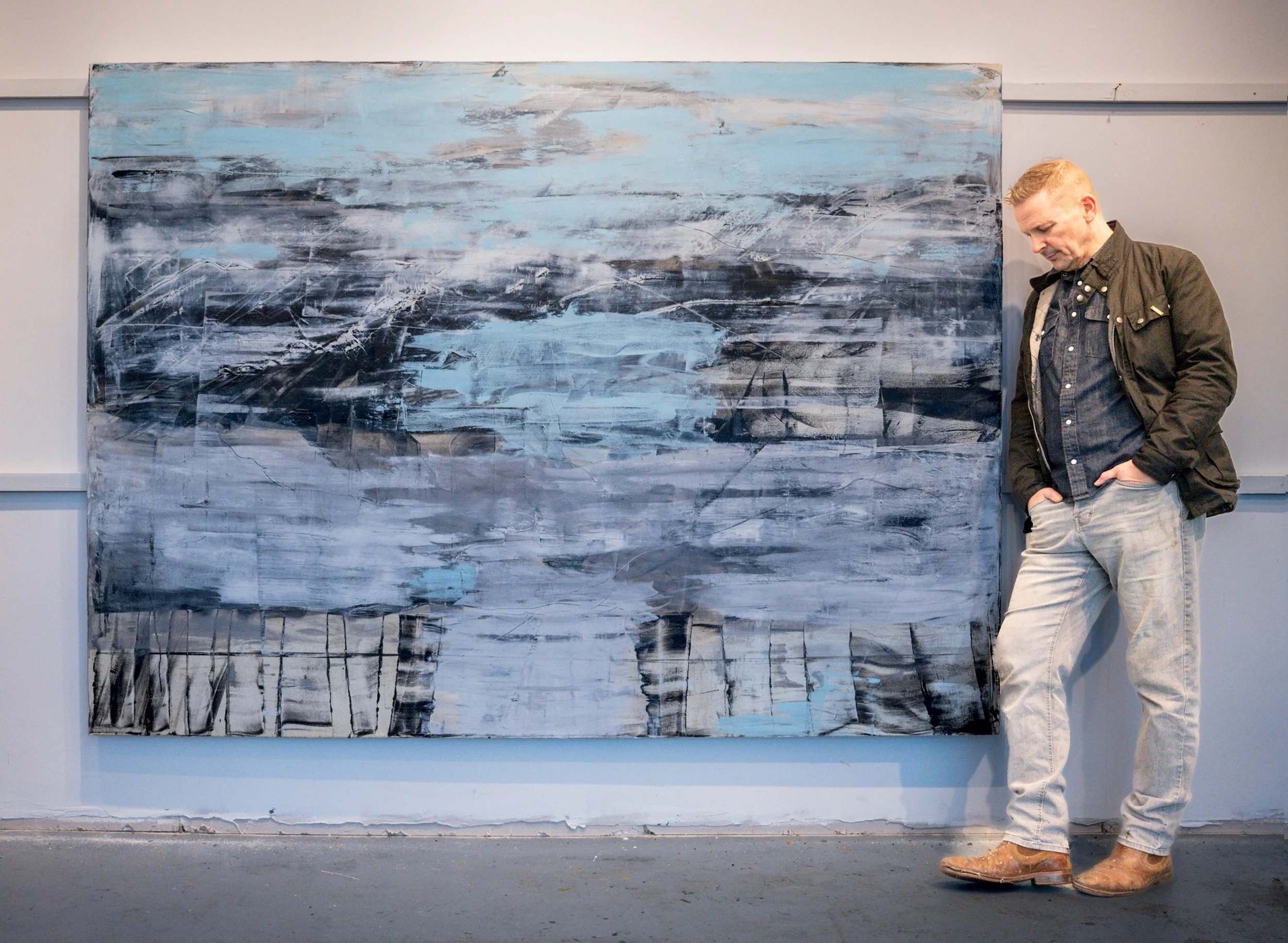
Has a material-led, process-driven practice - combining innovative techniques (for e.g, using recycled lead ground into pigment, etched and layered surfaces) with traditional drawing and painting, to create works that feel developed rather than simply made.
Critically recognised and institutionally connected - with solo exhibitions at Limerick City Gallery of Art (Boulder Milt), Draíocht, and others; board member at Highlanes Gallery, giving him profile and credibility in curatorial circles.
Has deep thematic relevance -his work explores climate change, fragility, memory, and transformation, aligning strongly with global cultural, environmental, and social discourse.
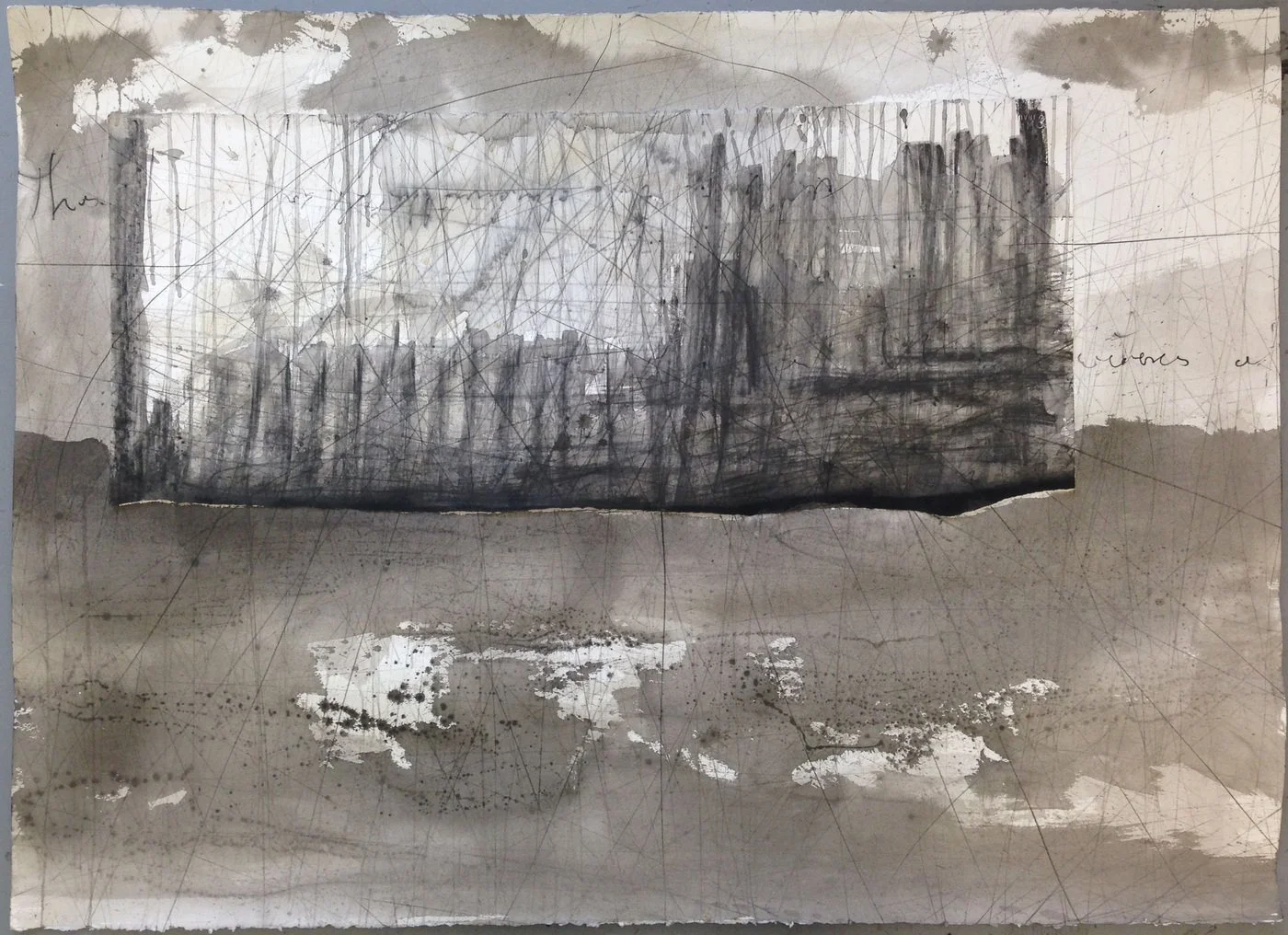
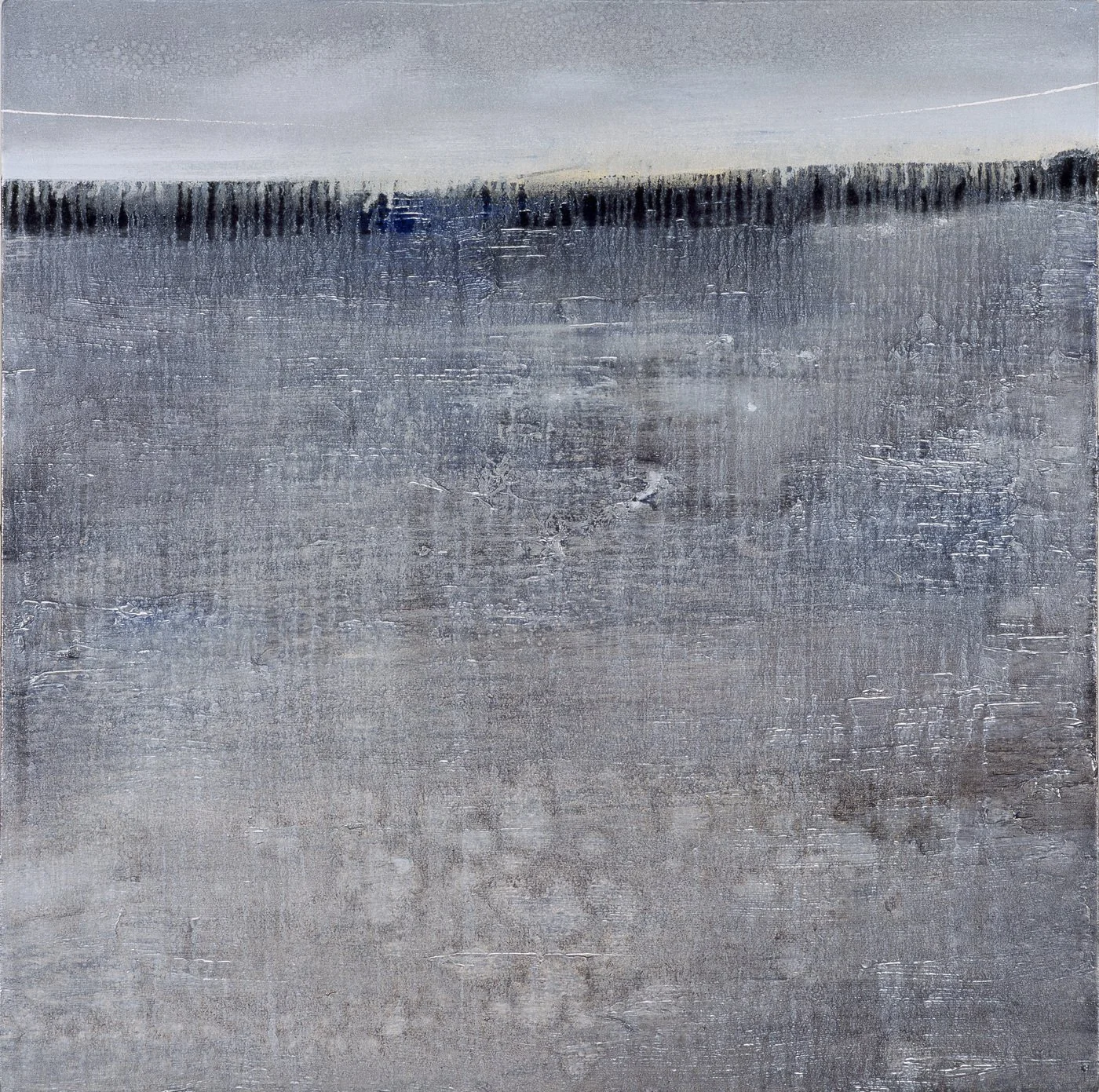
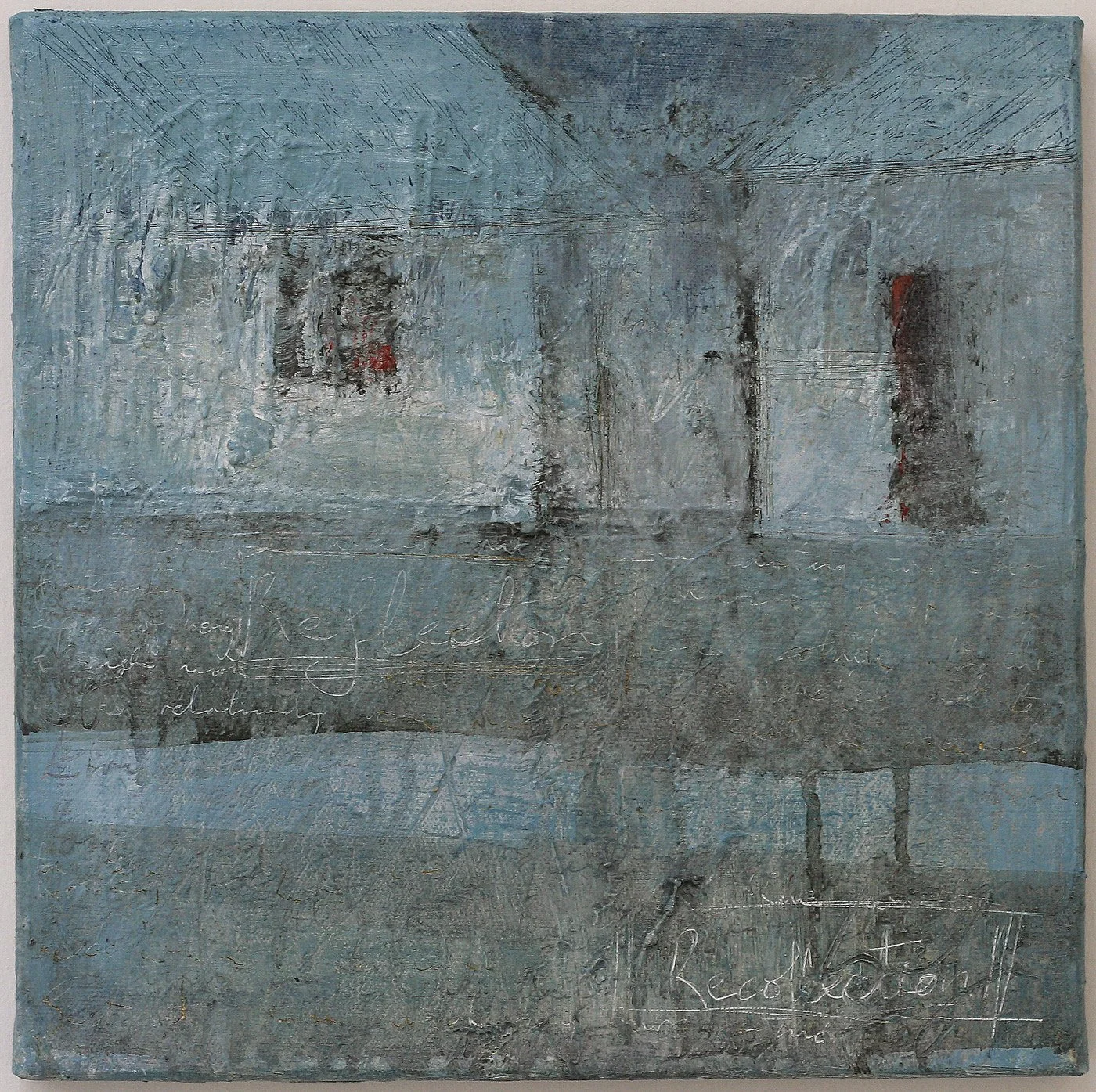
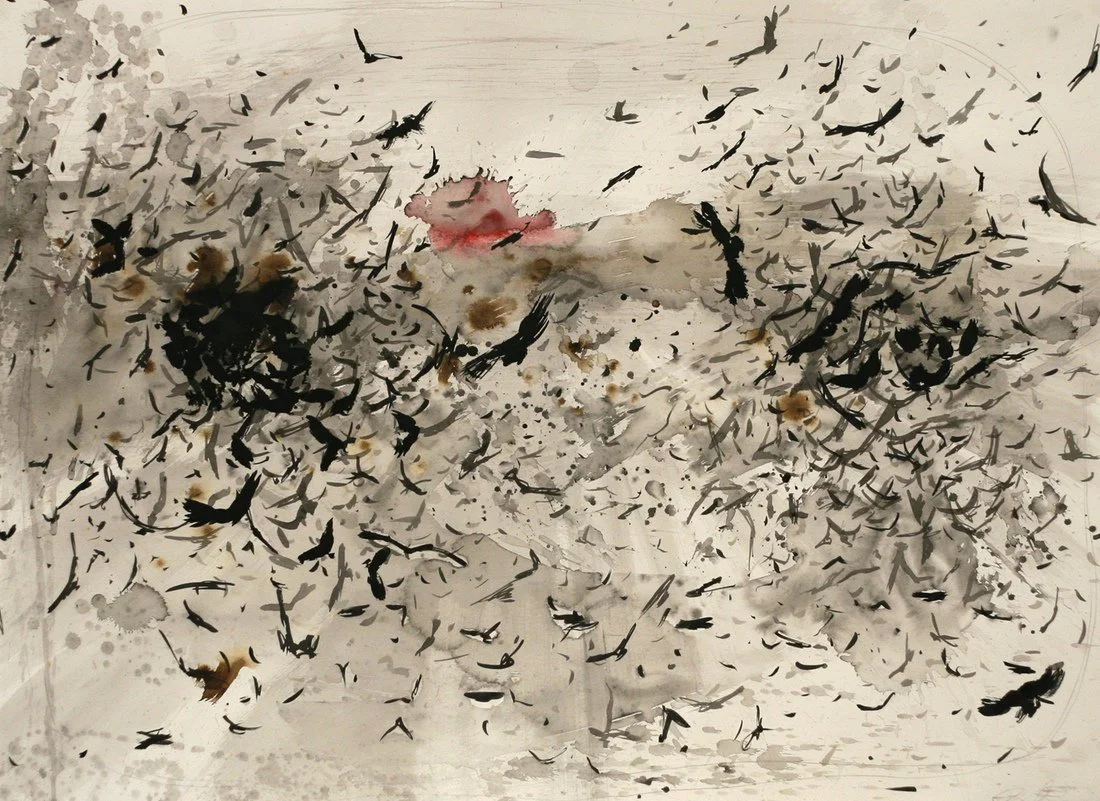
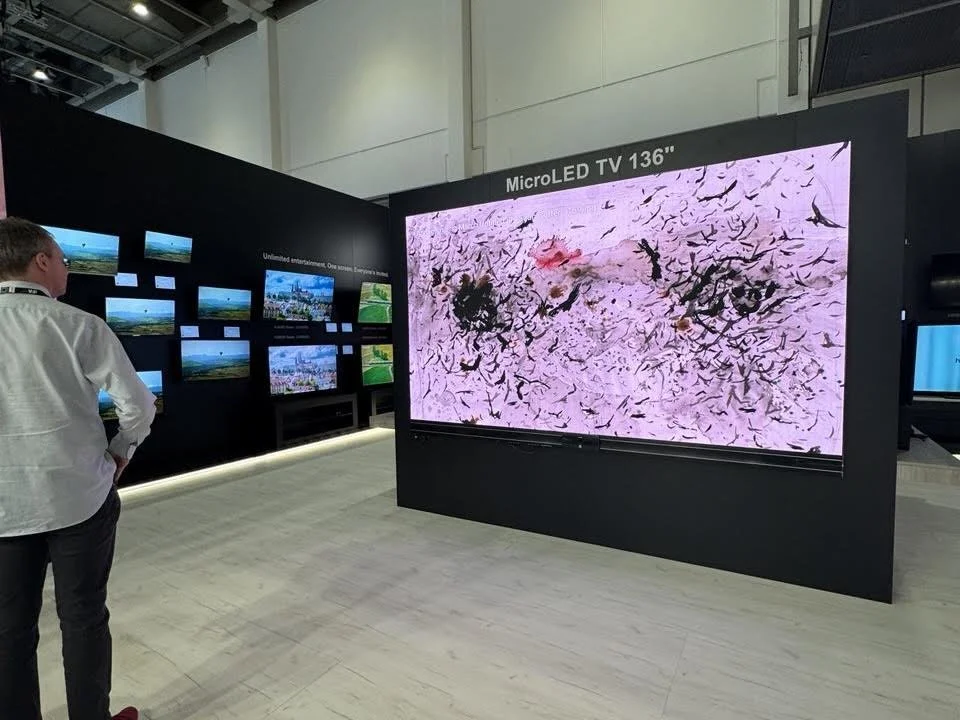
Has a distinct visual identity - with atmospheric, layered, and textured works that evoke, offering collectors and institutions a compelling mix of beauty and depth with works featuring calligraphy, mark-making, hand-made pigments, origami, as well as oil, watercolour and drawing based works, and with more forthcoming via digital and other new approaches too.
Pedigree offers strong exhibition and engagement potential, from paintings and works on paper to conceptual installations across various media (e.g., Pax - see below) that generate critical acclaim, sustained audience interest, repeat visits, and opportunities for talks, catalogues, and programming.
See Key Works Below
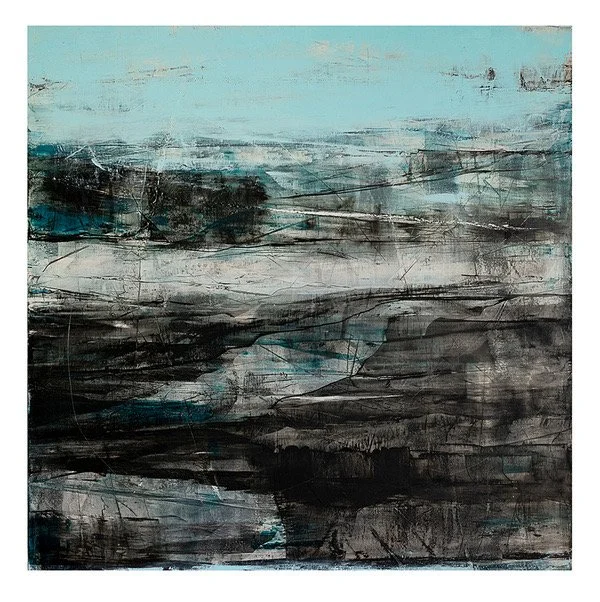
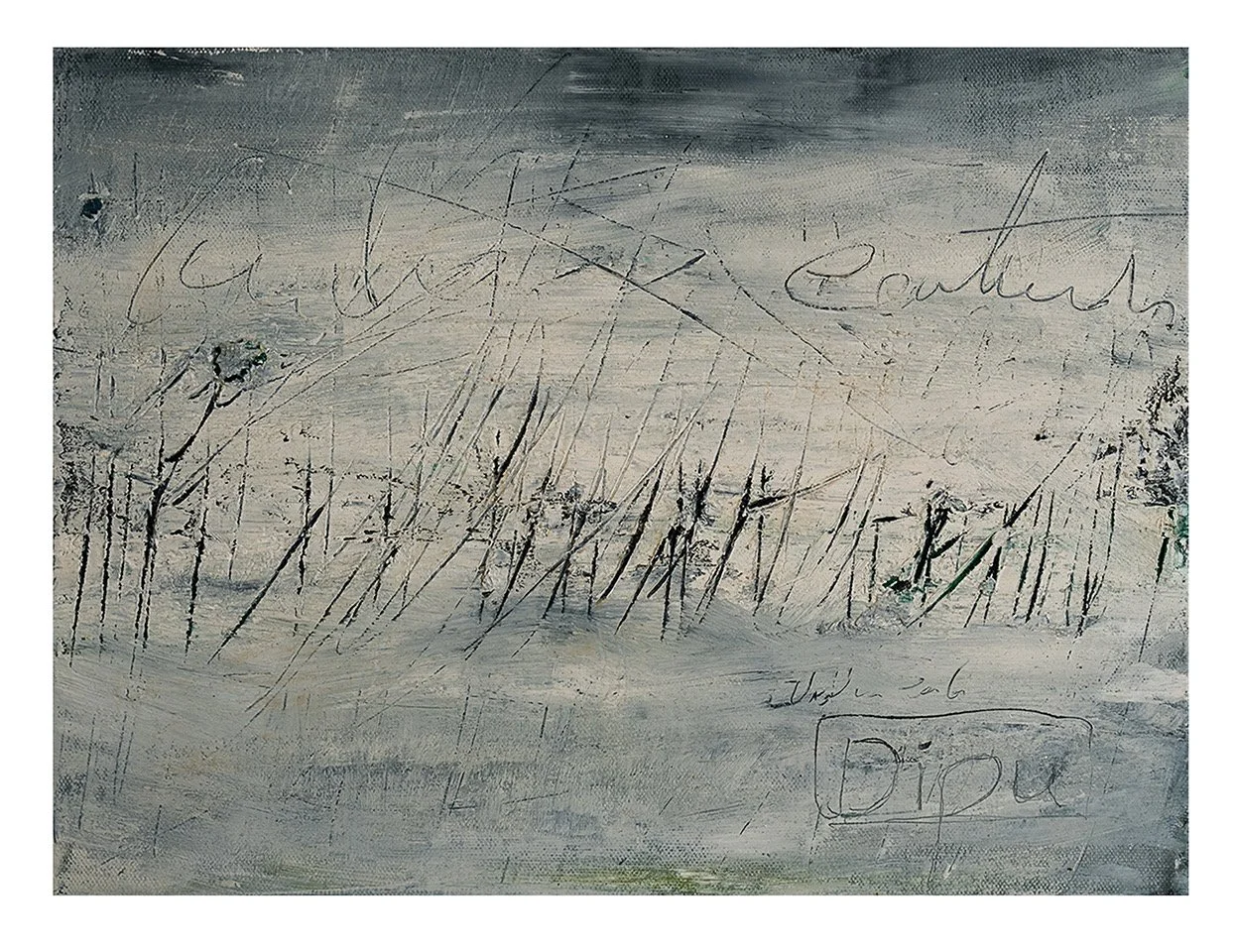
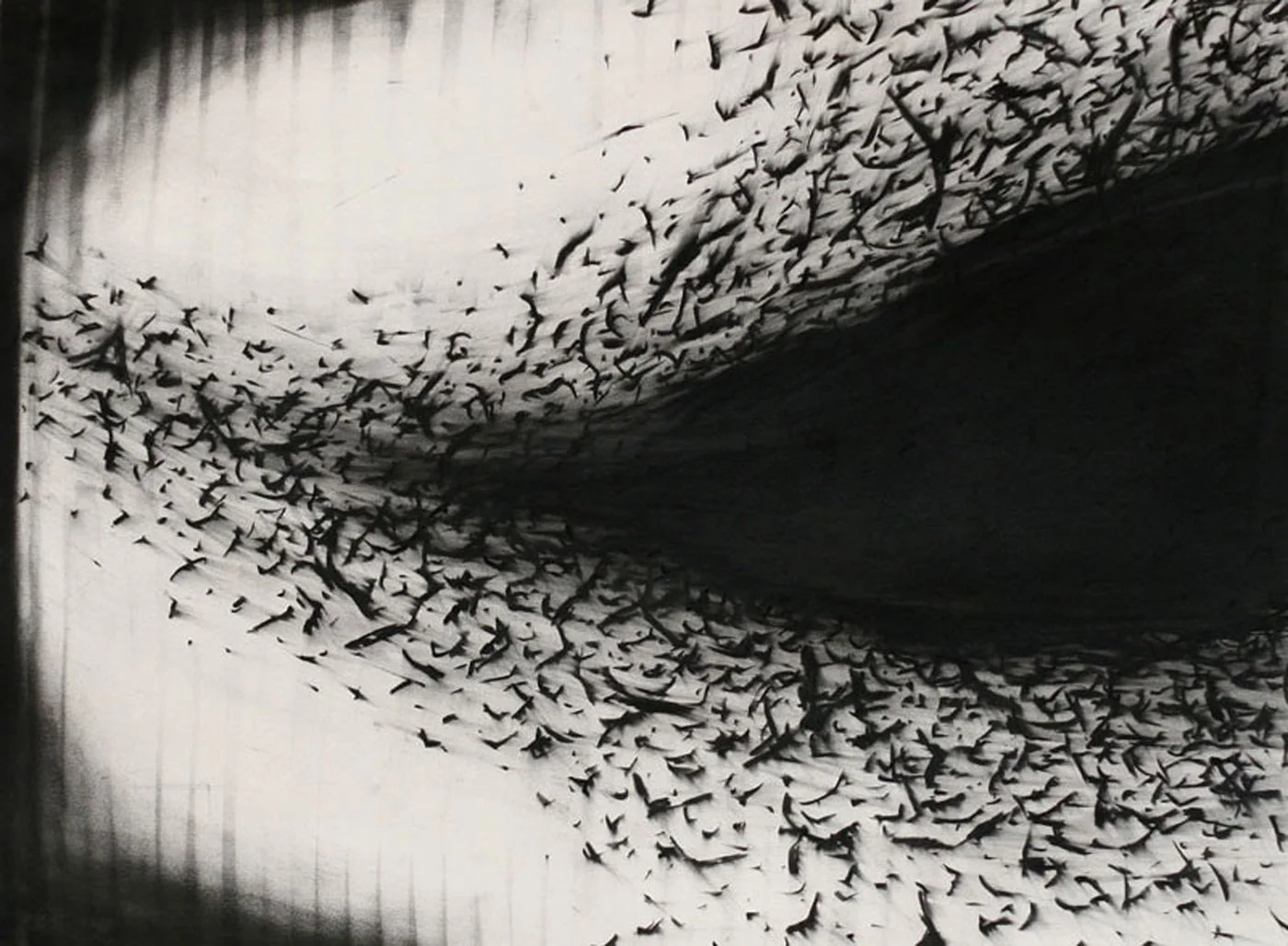

Critical Response
“While it is easy to position Cotter’s art within the dark European romanticism it is not at easy to place him among his contemporaries. His utter concentration on is vision means that…there are no obvious borrowings from any of them.”
— Catherine Marshall, Senior Curator at the Irish Museum of Modern Art “Cotter’s artwork, however, addresses the experiences of landscape, as in “Vatnajokull” 2020, not just its physical presence, but also the way it can evoke emotions and senses.”
— Dr. Yvonne Scott, Assoc. Prof. Art History, Trinity College “Sean Cotter creates arresting works of art that invite us to beyond the image as spectacle. “
— Irish Arts ReviewPax - A New Project, from Bullets to a Delicate Peace
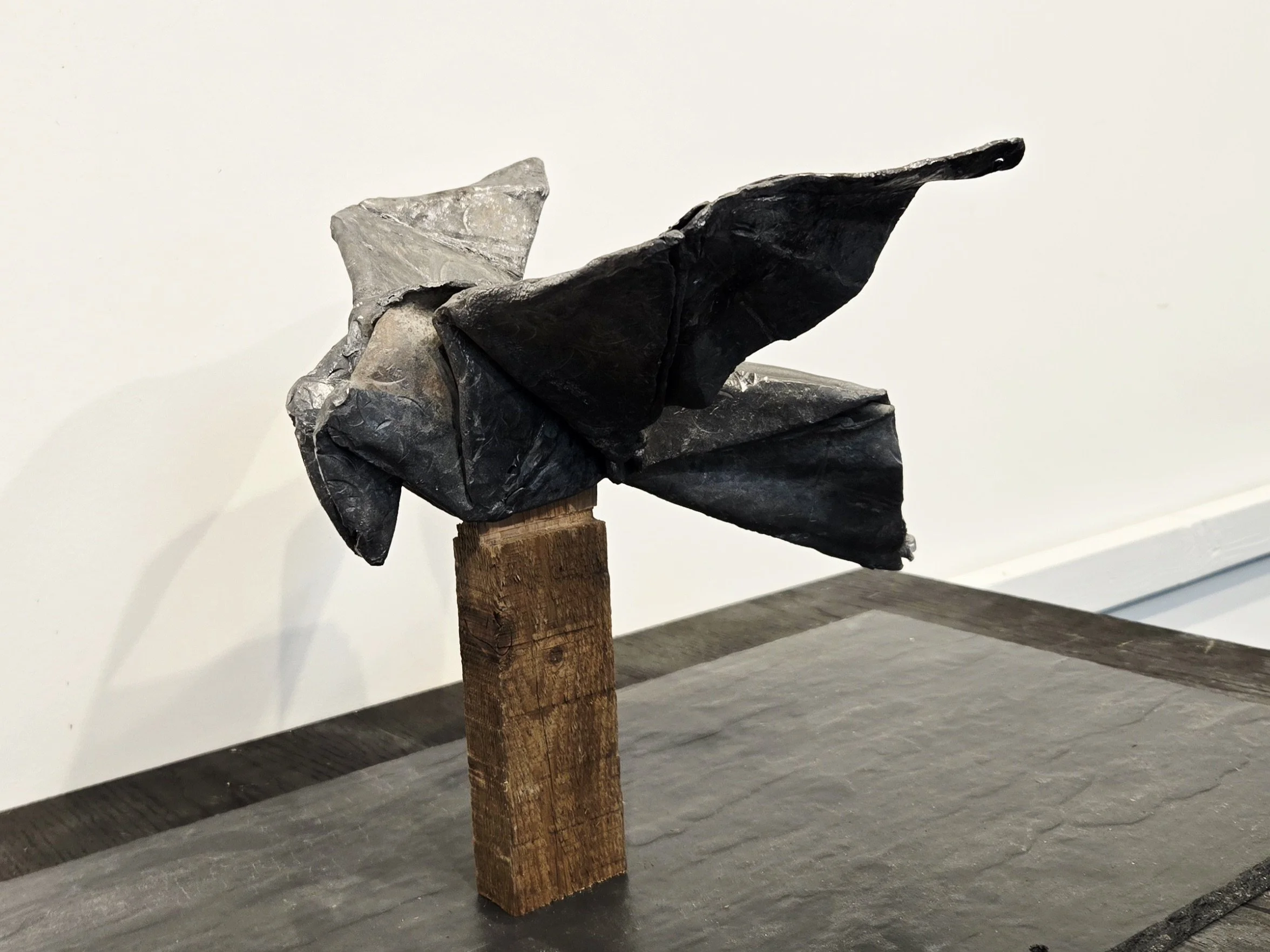
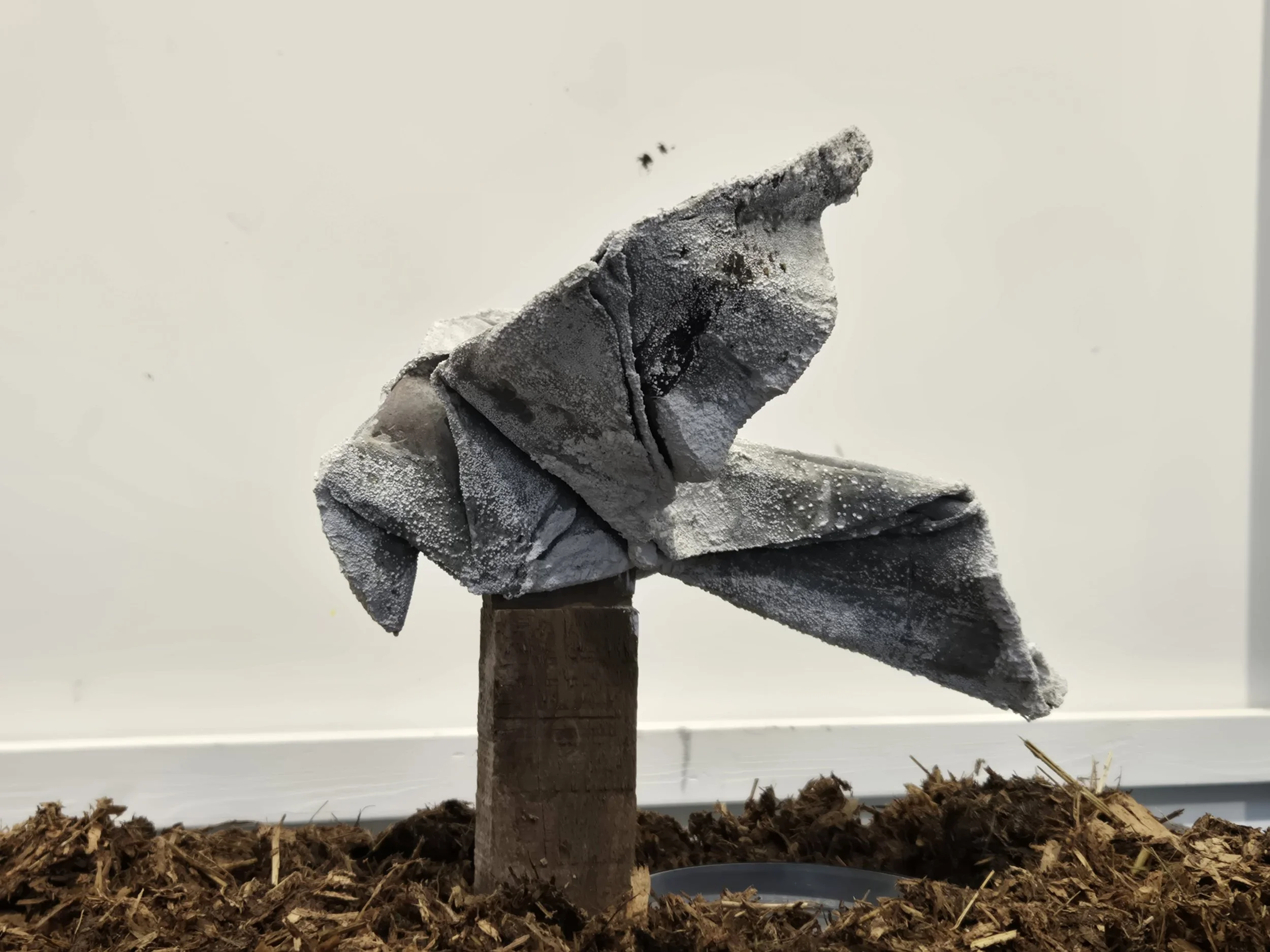
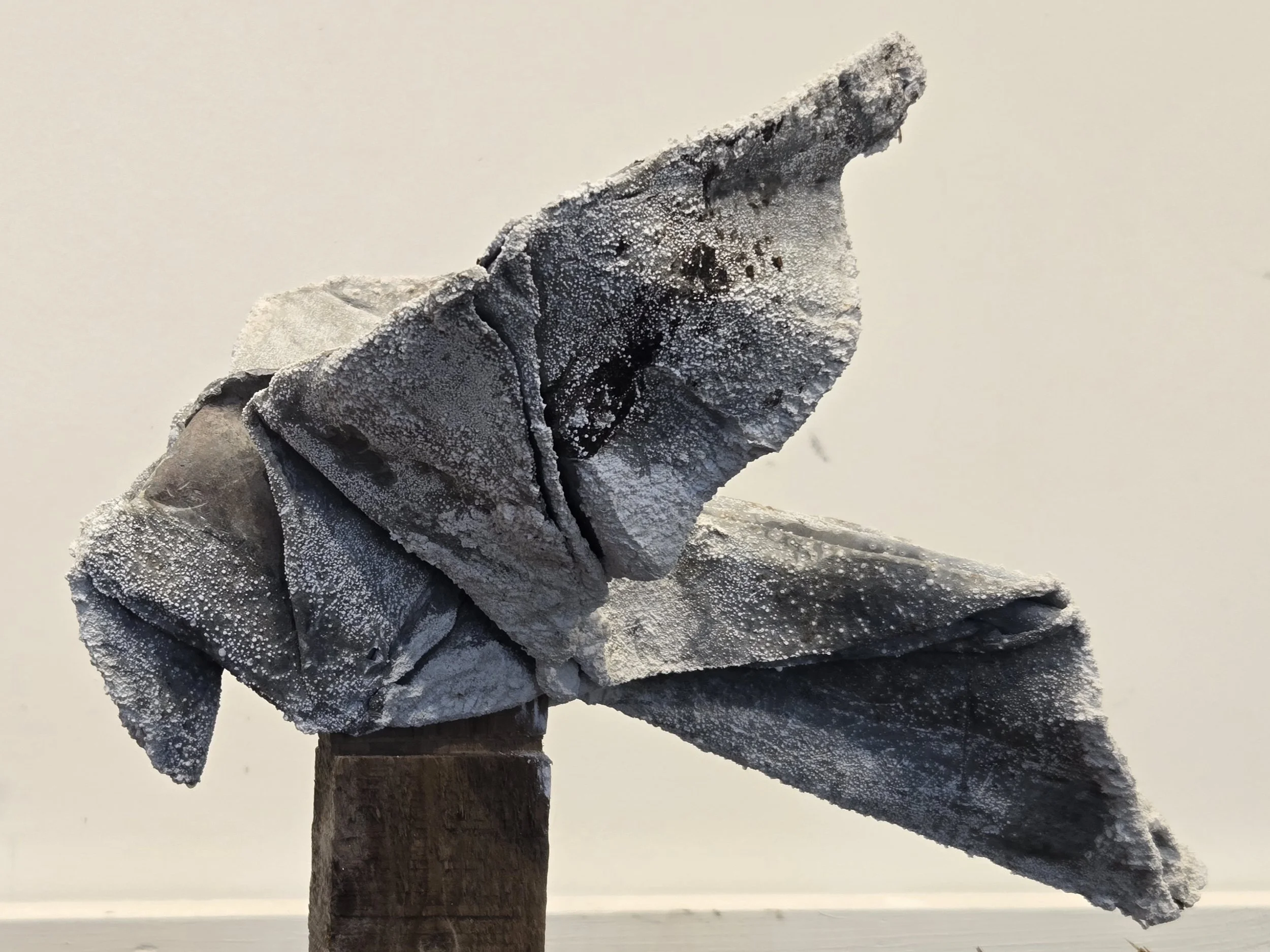
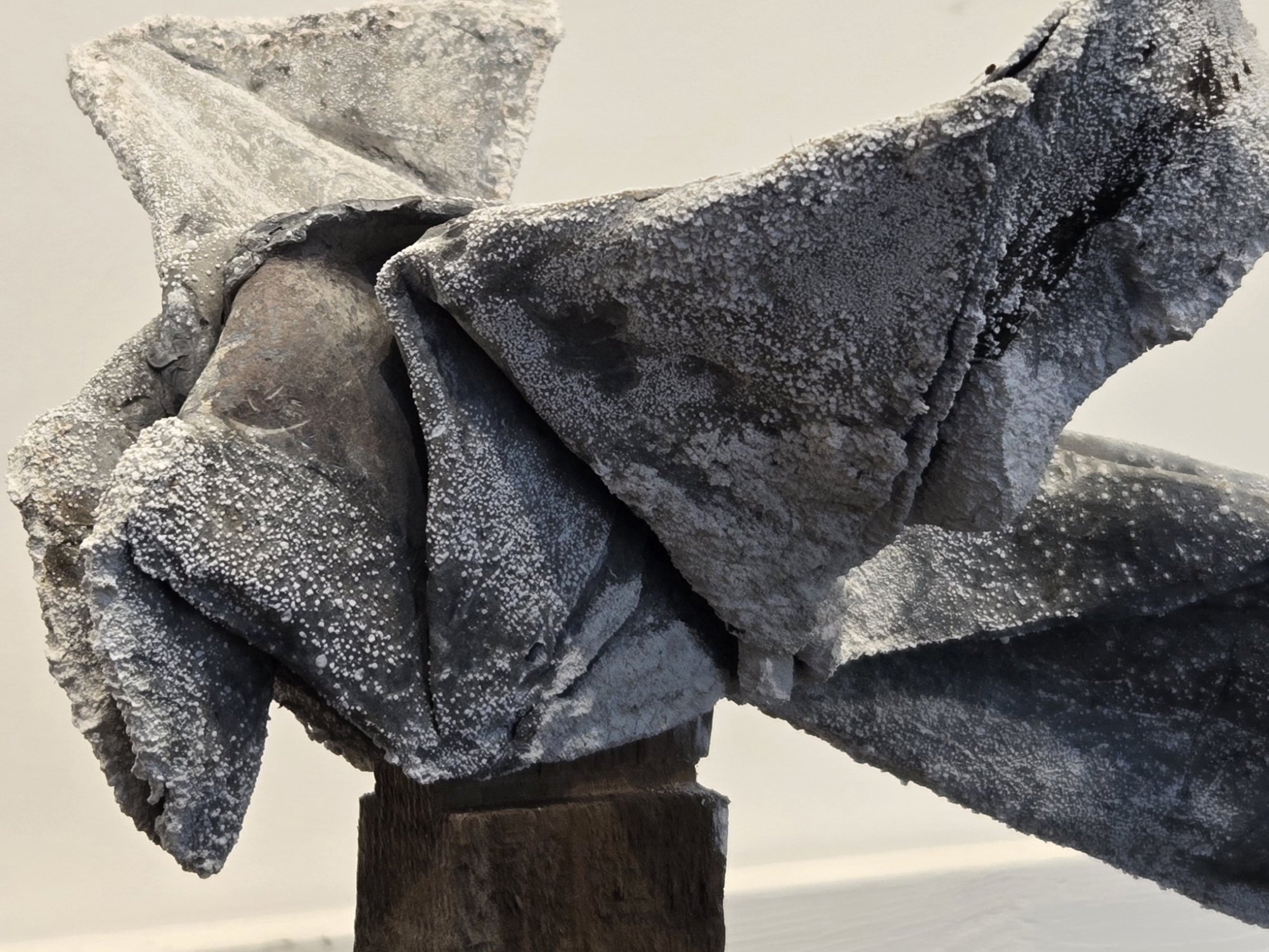
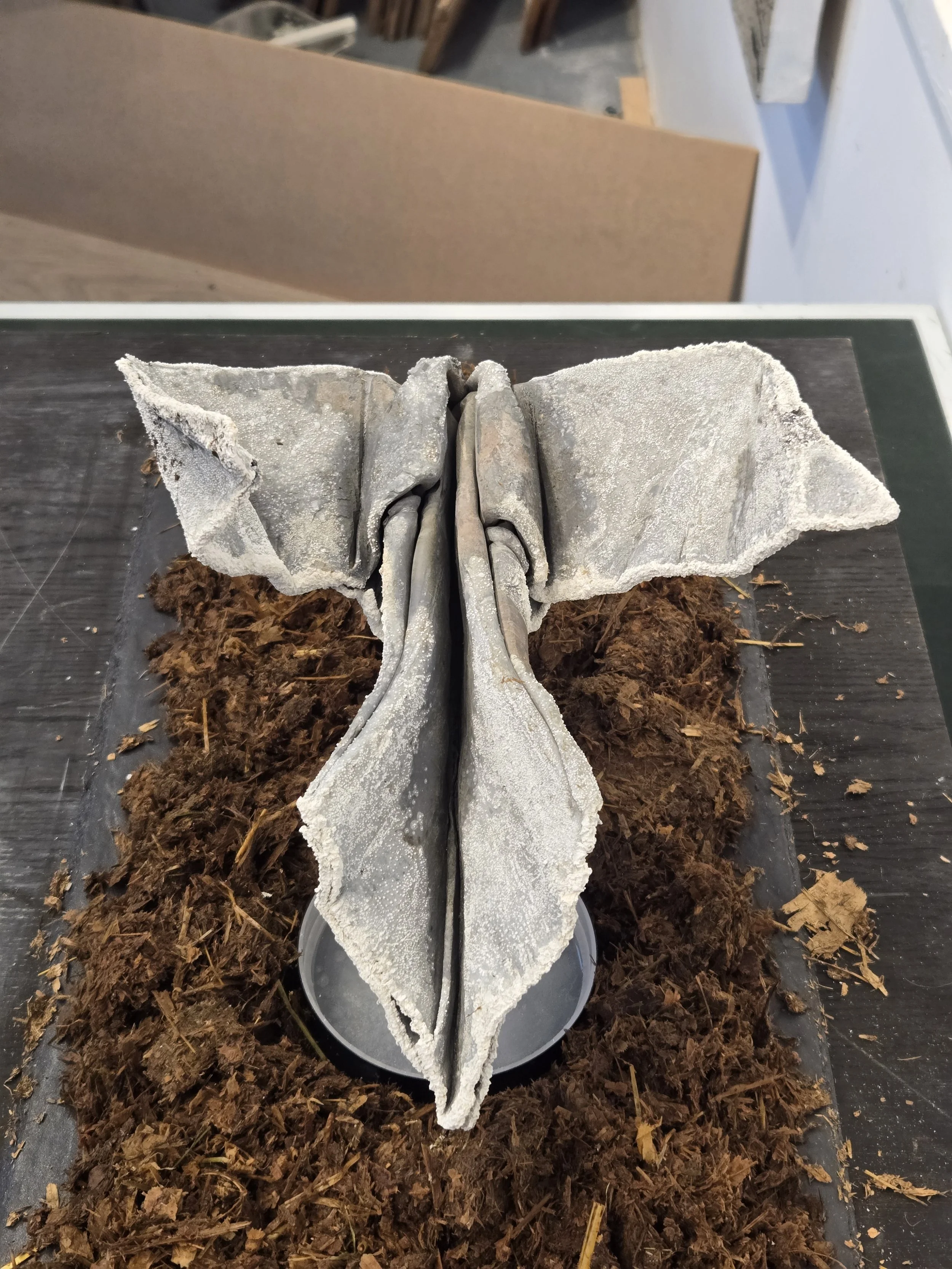
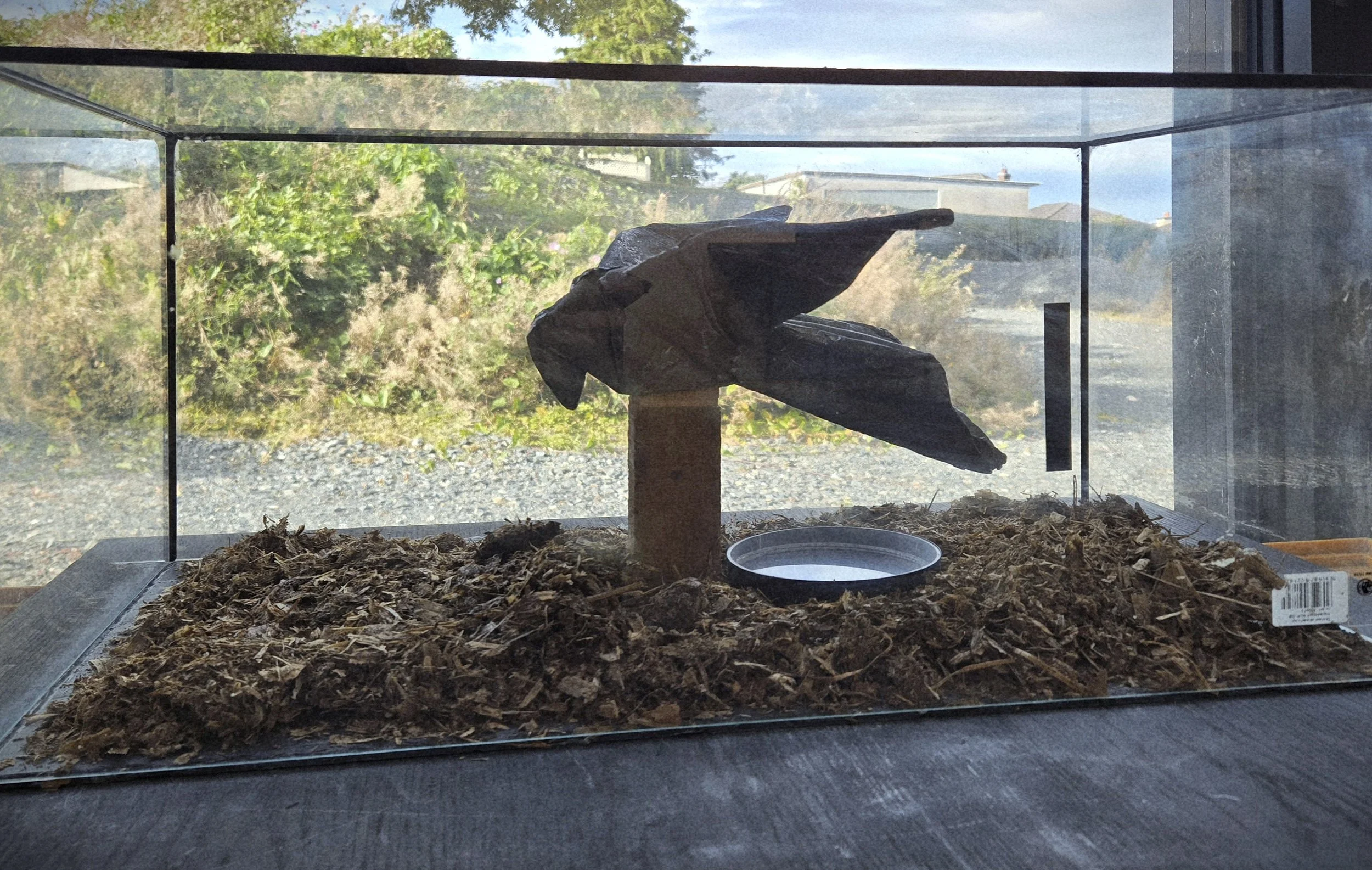
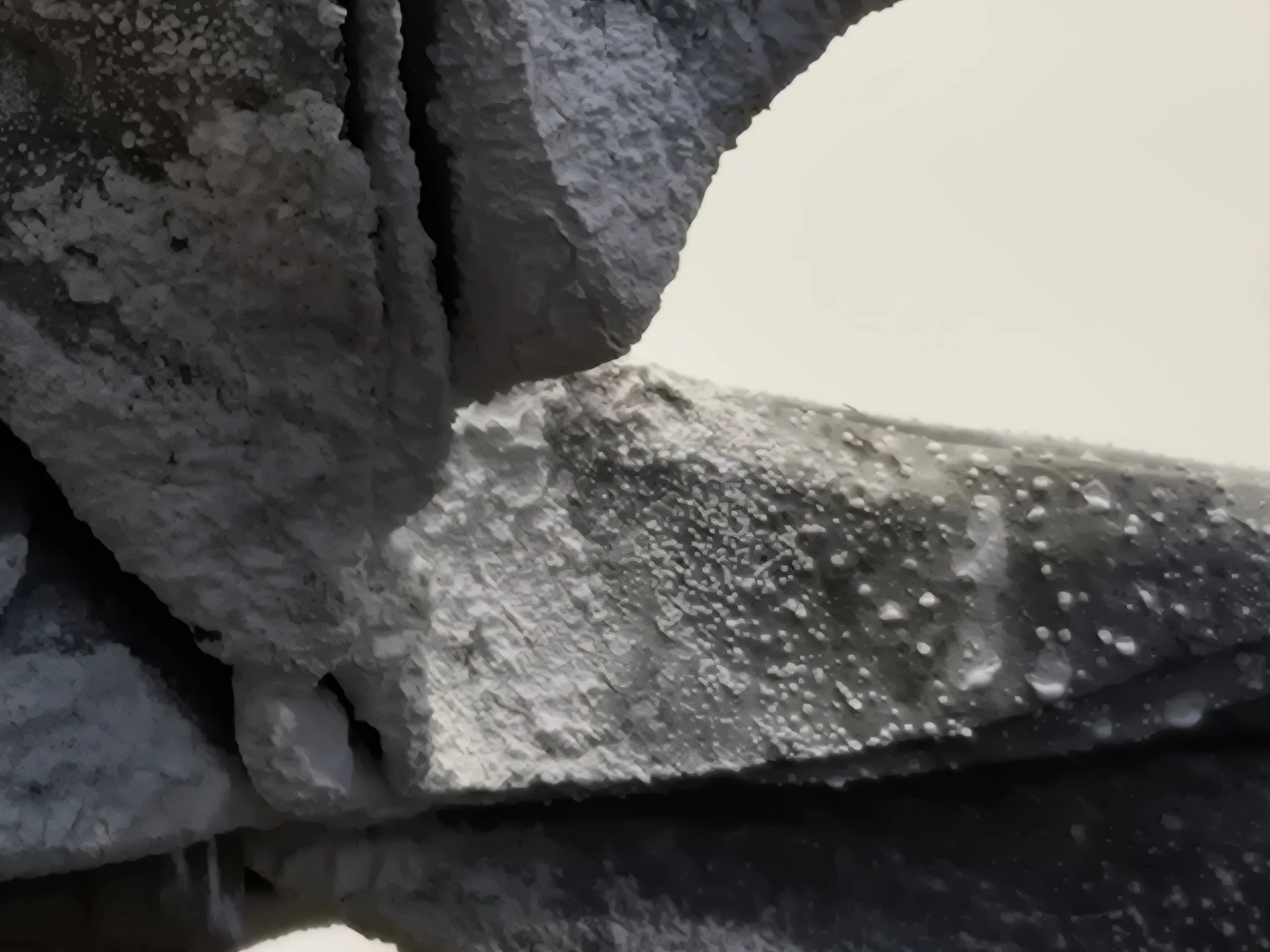
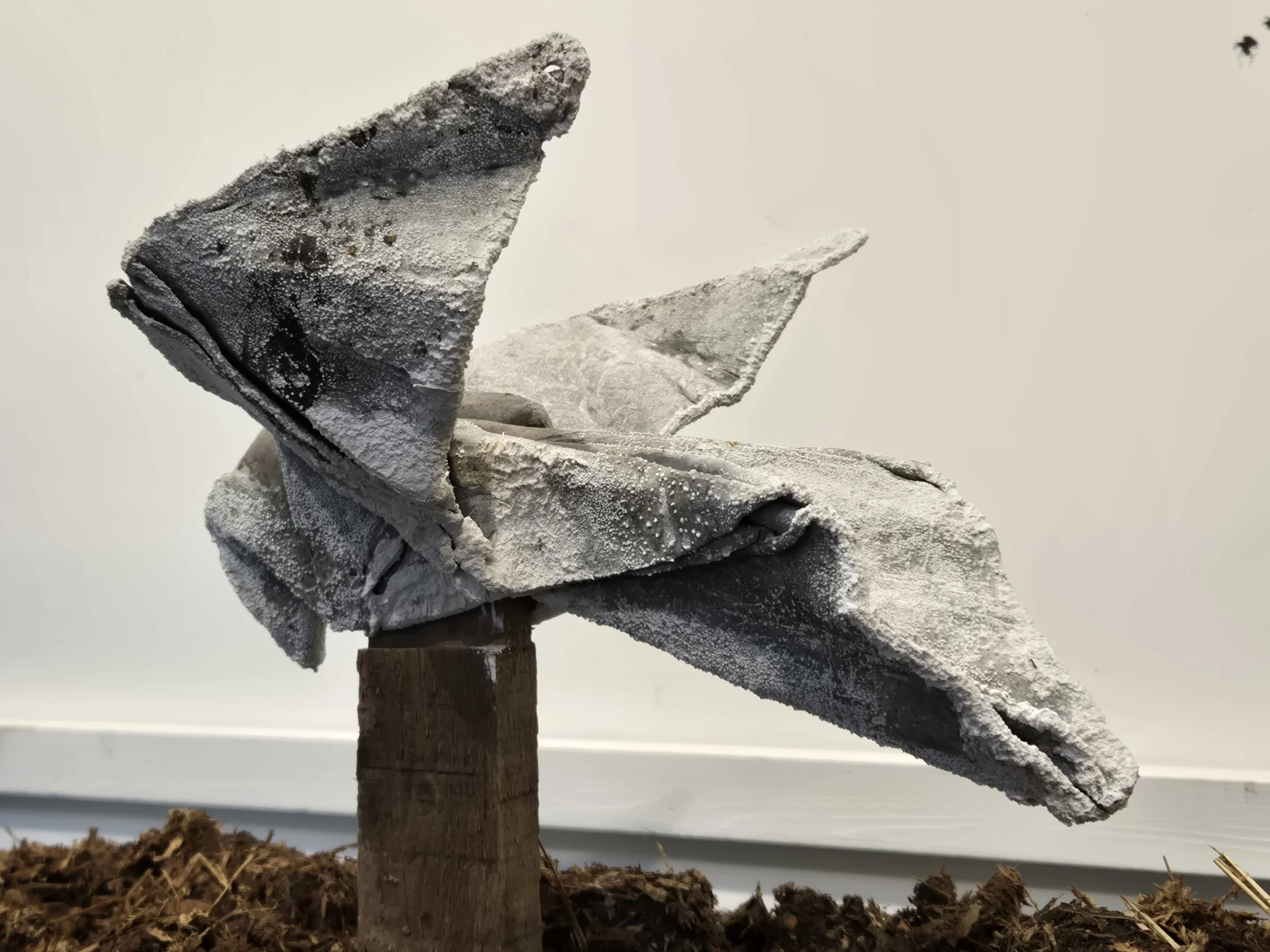
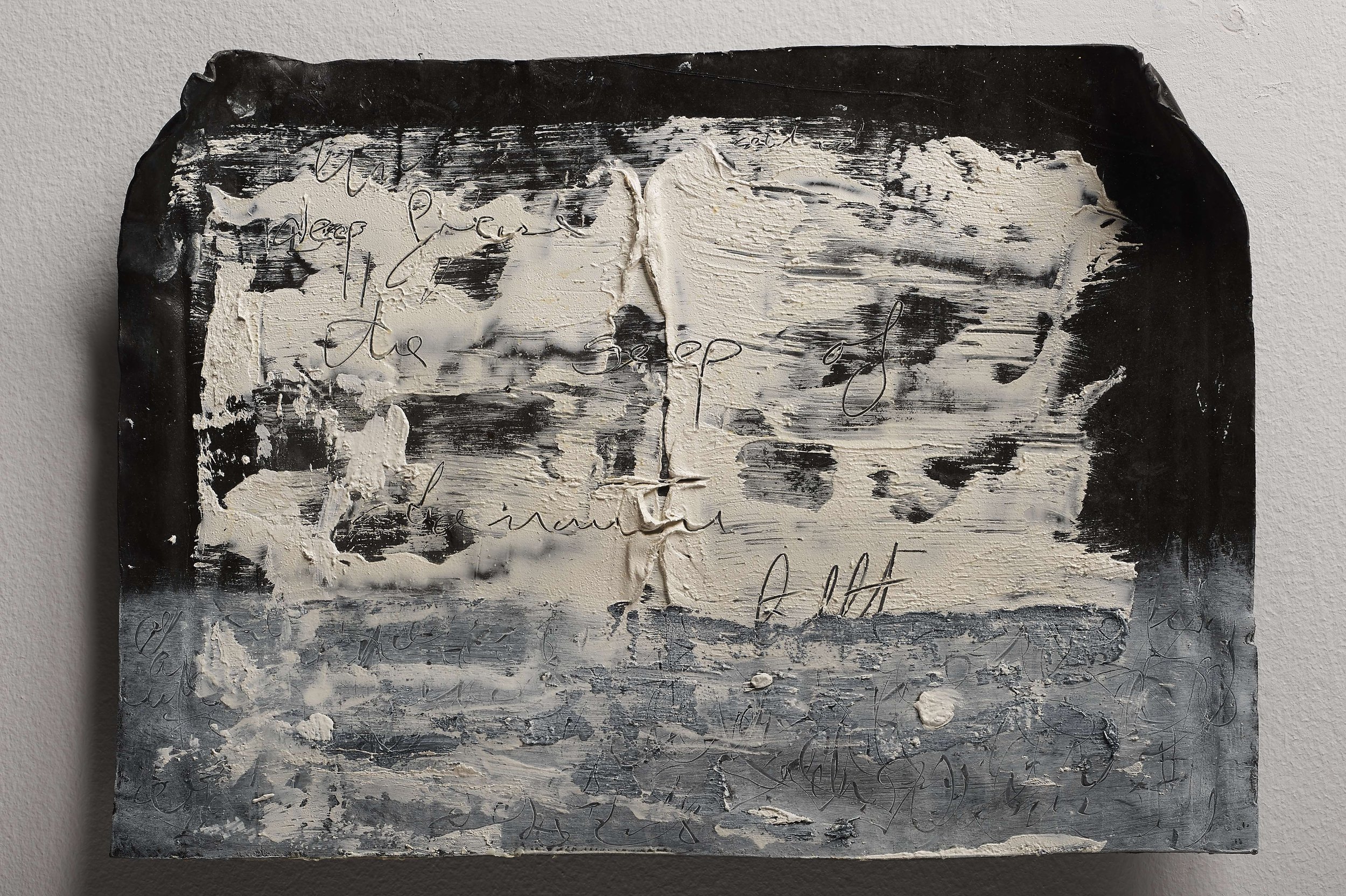
Pax is planned to be a multi-media experience based around a series of time-based lead sculptures that transform under controlled atmospheric conditions, using origami-inspired folds to form familiar peace symbols such as doves, olive branches, and flags. Created from recycled lead, the works evolve over weeks and months: grey, dense metal slowly corrodes to a fragile, white patina, historically the pigment “lead white.” This chemical shift, encouraged by mild vapours and warmth inside sealed vitrines, serves as both a visual and conceptual metaphor for peace’s fragility.
The transformation from a weapon-making metal to delicate, unstable surface suggests a moral passage from harm to care, while also revealing vulnerability’s double edge, beauty that is easily lost and materially compromised. The vitrine is integral, functioning as a safe microclimate, a protective barrier, and a symbol of peace’s containment and precarity.
The work engages with historical craft traditions, environmental processes, and political realities, reflecting on how peace is eroded by conflict, inequality, and social division. The toxic nature of lead is embraced as part of the metaphor: mishandled peace, like mishandled lead, can cause harm.
Over time, surfaces soften, colours shift, and powder accumulates, changes documented through photography and video to share the work’s evolving state. Pax is both object and record: a meditation on transformation, vigilance, and the active, careful maintenance that peace demands.
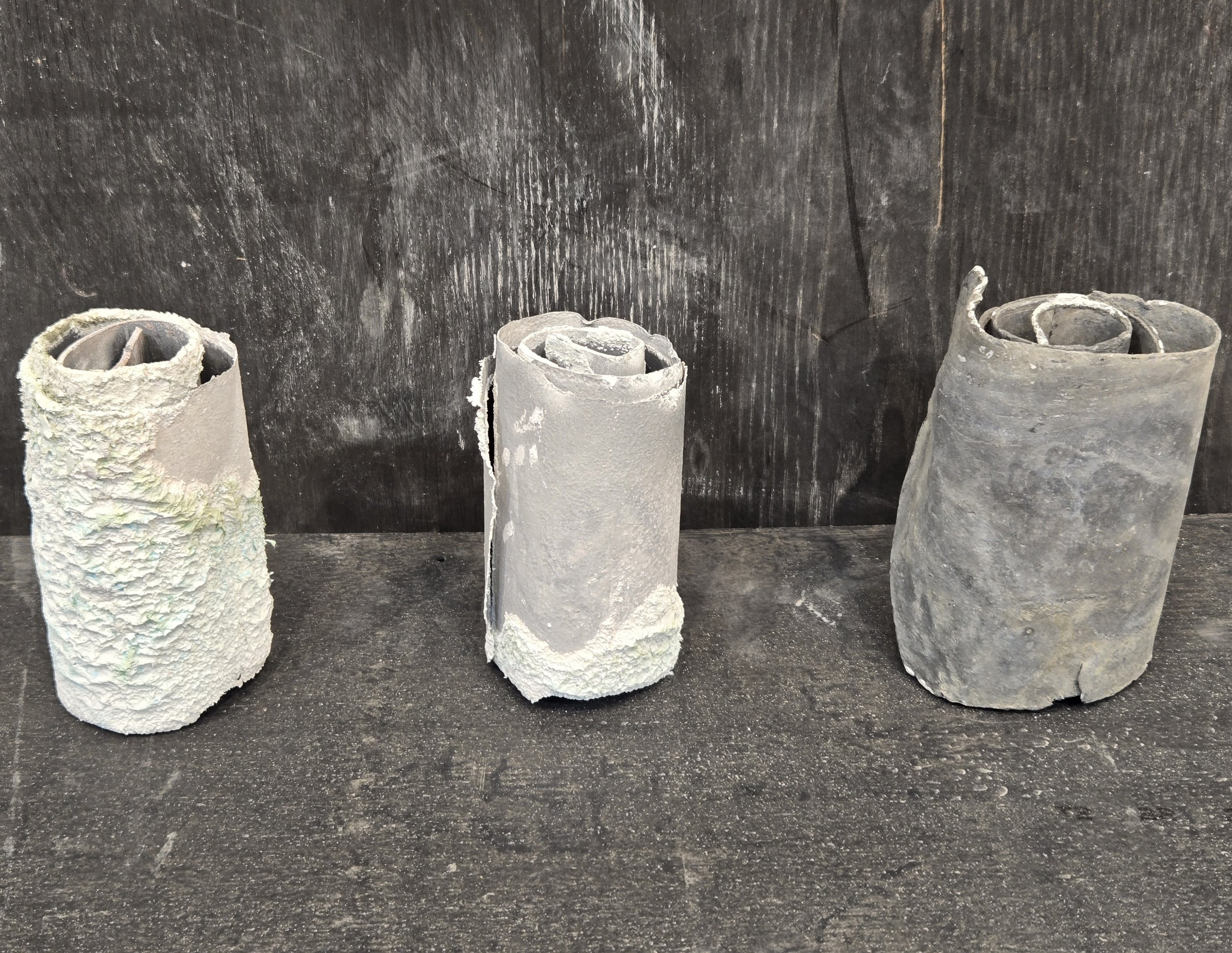
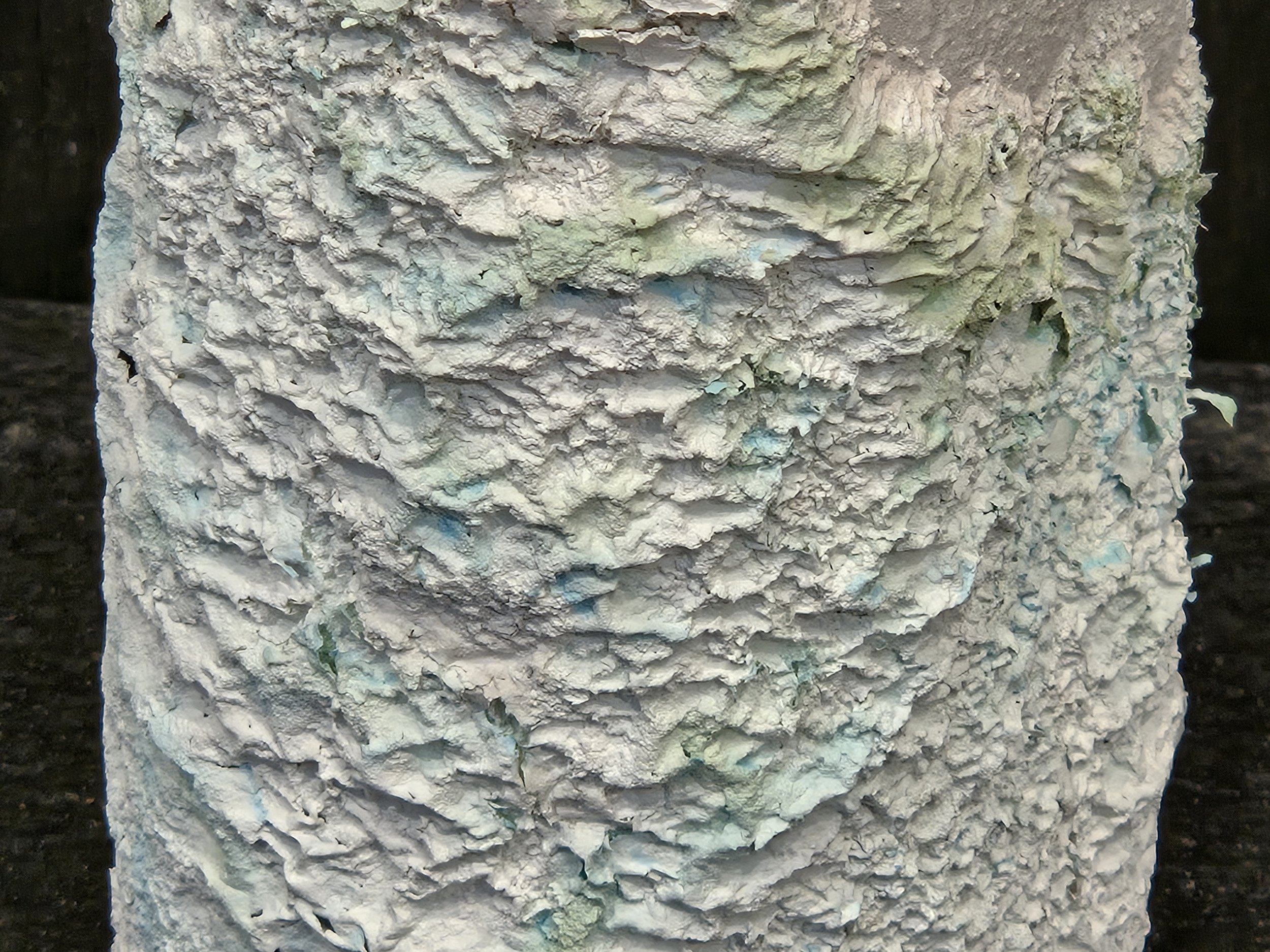
Works based on the concept are envisioned being available in various media, including video, photography, digital, sculpture, and works on canvas and paper at the minimum. See below for first concept tests and potential first works.

Selected Collections & Exhibitions
For full extensive CV, with press, residences etc see below
Collections
Office of Public Works, Kildare, Louth, and Wicklow County Councils
Lapua Art Museum, Finland; Lapua Art and Science Foundation, Lapua
College of Humanities, Limerick; Limerick City Gallery of Art
Highlanes Gallery, Drogheda; Irish Contemporary Arts Society
AXA Insurance; Drogheda Borough Council
Aviva Investors, London; Eversheds O’Donnell Sweeney, Dublin
National Drawing Collection, Limerick.
Selected Exhibitions
Solo Shows
2025
- Boulder Milt, Limerick City Gallery of Art, Limerick
2013
- Hinterland, Gormley’s Gallery, Belfast
2011
- The Dark Pastoral, Gormley’s Gallery, Dublin
- Memorate, Millennium Court Arts Centre, Portadown
2010
- The Slow Decent, Gormley’s Gallery, Dublin
2009
- The Traveller, An Táin Arts Centre, Dundalk
2008
- Notational Morphologies, Lapua Art Museum, Lapua, Finland
Galway Arts Festival, Galway
2007
New Work, Carlinn Gallery, Carlingford
2006
- Painted Tales, Wicklow County Buildings, Wicklow
2005
- Painted Tales, Hallward Gallery, Dublin
- Éigse, Carlow Festival of Visual Art, Carlow
- New Paintings, Droichead Arts Centre, Drogheda
- Paintings and Drawings, Draiocht Arts Centre, Blanchardstown
2004
- Horizons, Norman Villa Gallery, Galway
Invitation to Collaborate
We invite galleries, curators, and institutions to collaborate. We feel that the “Pax” concept in particular offers great opportunities. In addition, Sean is happy to consider or offer the following grounds for collaboration:
Solo or group exhibitions featuring climate-driven, materially innovative work.
Acquisition opportunities across paintings, works on paper, and select sculptural pieces.
Public programming including artist talks, masterclasses, and panel discussions.
Interdisciplinary partnerships with conservation labs, environmental institutes, and universities.
Commission potential for site-responsive or research-based works.
Audience engagement assets such as process documentation, time-lapse transformation, and behind-the-scenes content.
Curatorial depth supported by existing critical writing and catalogues
These options can be explored, with the opportunity to deliver funding support from private and public sources, In certain cases gifting of work can be explored as well.
Why Sean Matters To You
Connectivity - His practice spans paintings, works on paper, and select installation methods allowing galleries and museums to build exhibitions at different scales, budgets, and spatial requirements.
Nature - Engaging, full of great stories, humble, and a serious practitioner, Sean is a great spokesperson for his art, who grasps and holds your interest.
Credible & Reliable - Cotter has exhibited in and been acquired by respected venues, including Limerick City Gallery of Art, and the Highlanes Gallery, where he sits on the board. All demonstrating his professional standards, governance experience, and an understanding of institutional expectations.
Relevance - Themes around climate, material transformation, peace and social fragility align with current curatorial trends, increasing the likelihood of press coverage, partnerships, and access to environmental or cultural funding streams
Education - His process-driven work lends itself naturally to artist talks, workshops, demonstrations, and interdisciplinary programming, helping institutions meet audience-development and education goals.
Interested, then contact us
Initial contact can be made in English, or German via at Adler and Moriarty, contact details as below, for German contact Daniela for English contact Richard:
EN – Richard Ayrton
E: richard@adlerandmoriarty.com
•T: +49 176 31576175 (please leave a message if unavailable)
DE – Daniela Holischeck
E: daniela@adlerandmoriarty.com
T: +49 152 54124435 (please leave a message if unavailable)
Sean is also available to discuss options on a call or similar. Or he is available for a video call and tour of his studio.
Short Artist’s Statement
Abstracted works work as a metaphor for life and its dramas, whether in turmoil or at peace. Wide open spaces can be shut down by a few well placed lines and so emulate the constraints of the modern world or a persons desire to contain and control their own immediate emotional environment. Blurred boundaries between areas of light and dark recall the sometimes difficult choices that are neither right nor wrong. While history, whether the viewers or the images, impacts on every work it is its own aesthetic that carries it off in the end and it is the exploration of my medium that keeps me behind my studio door.
Full CV - As of Autumn 2025
b.1969, based in Cavan, Ireland
Education
BA Fine Art: National College of Art and Design, Dublin, 1986 – 1991
Erasmus, Winchester College of Art, England, 1990
Selected Solo Exhibitions
2025
- Boulder Milt, Limerick City Gallery of Art, Limerick
2013
- Hinterland, Gormley’s Gallery, Belfast
2011
- The Dark Pastoral, Gormley’s Gallery, Dublin
- Memorate, Millennium Court Arts Centre, Portadown
2010
- The Slow Decent, Gormley’s Gallery, Dublin
2009
- The Traveller, An Táin Arts Centre, Dundalk
2008
- Notational Morphologies, Lapua Art Museum, Lapua, Finland
Galway Arts Festival, Galway
2007
New Work, Carlinn Gallery, Carlingford
2006
- Painted Tales, Wicklow County Buildings, Wicklow
2005
- Painted Tales, Hallward Gallery, Dublin
- Éigse, Carlow Festival of Visual Art, Carlow
- New Paintings, Droichead Arts Centre, Drogheda
- Paintings and Drawings, Draiocht Arts Centre, Blanchardstown
2004
- Horizons, Norman Villa Gallery, Galway
Hallward Gallery, Dublin
2003
- Borderlines, Riverbank Arts Centre, Newbridge
2002
- Corvidophilia, Hallward Gallery, Dublin
2001
- Corvidophilia, Galway Arts Centre
1996
- Voyages, County Library Naas
Siamsa Tire Arts Centre, Tralee
Galway Arts Centre, Galway
1995
- Voyages, St. John’s Arts Centre, Listowel
- Linenhall Arts Centre, Castlebar
1994
- Religion of Magic, emerging artist GIAF, Galway
Commissions
2013
- The Poetry Project, curated by Patrick T Murphy and Gemma Tipton, http://thepoetryproject.ie/ Video piece created in response to a poem
2007
- Kildare County Council, paintings installed at Monasterevin Library, Kildare
Selected Group Exhibitions
2025
- Sartori, Firkin Crane, Cork
2023
- Finding Form, Riverbank Arts Centre
2020
- Surveyor, Solstice Arts Centre, Navan
2019
- Feeling Home, Lapua Art Museum, Finland
- Consequence of Memory and Pulse, Burren College
- Taisce Lu: A Curator’s Choice, Basement Gallery, An Táin Arts Centre, Dundalk
- Surveyor, Solstice Arts Centre, Navan
2017
- Memory Has a Pulse, 126 Gallery, GIAF, Galway
- RHA Annual, Royal Hibernian Academy Dublin
2016
- 30 Years, Artists, Places, various Arts Centres across Ireland
- Breathing Space, Basement Gallery, An Táin, Dundalk
2012
- Landscape, Limerick City Gallery of Art
- 7.42, Lapua Art Museum, Finland and Highlanes Gallery, Drogheda
- RHA Annual, Royal Hibernian Academy Dublin
2010
- Planes of Colour, Gormley’s Gallery, Belfast
- Boyle Arts Festival, Roscommon
- RHA Annual, Royal Hibernian Academy Dublin
2008
- Essence, Gormley’s Gallery, Belfast
2007
- Ireland-England-Scotland, Sean Cotter, Peter Howson, Jock McFadden and
Michael McSweeney, Howson Gallery, Oslo
- Selected Artists, Vanguard Gallery, Cork
2006
- Iomha, curated by Cliodhna Shaffrey and Ruairi Ó Cuiv, Basement Gallery, An Táin Arts Centre, Dundalk, Droichead Arts Centre, Drogheda and Lapua Cultural Centre, Lapua, Finland
2003
- Irish Artists, Collyer-Bristow, London
2002
- Begegnung-Rencontre-Meeting, Galway Arts Centre
1998
- Sense of Being, Foxford exhibition Centre
- Tusnu Nua, Logan Gallery, Galway
- Begegnung-Rencontre-Meeting, Scharpf Galerie, Wilehm Hack Museum, Germany and
Galerie du Faouedic, Lorient, France
1996
- L’Imaginaire Irlandais, L’Embarcadere, Lyon and Salle D’Exhibition de L’Hotel de Ville, Lorient, France, and Galway Arts Centre
- Selected Group show, West Cork Arts Centre
Residencies/Awards
- Covid19 Crisis Response Award, Arts Council of Ireland 2020
- Fishfactory Creative Centre Residency, Iceland, January 1-30th, 2020
- Creative Spark Print Studios Residency, January 1- March 31, Dundalk, 2016
- Invited Artist, RHA Annual, 2012
- Arts Council Travel Award, 2012
- Villa Ukuli, Lapua, Finland 2010 and 2008
- Tyrone Regional Bursary Award, Residency 2007
- Cill Rialig, Kerry, Residency award, 2005
- Ludwigshafen Residency, Germany, 1997
- Kildare Corporation Touring Award, 1996
- Arts Council Flight Award, 1996
- Galway Corporation Exhibition Grant 1995
Publications
- Boulder Milt, catalogue for exhibition, 2025. ISBN:978-1-7392247-2-1
- Notational Morphologies, catalogue essay Painting the Second Coming by Catherine Marshall, 2008. ISBN:978-0-9560994-1-9
- Éigse, Carlow Arts Festival, essay by Helen Carey, 2005. ISBN:0-9547823-1-3
Essays
- Dr Yvonne Scott, Landscapes of Fire and Ice, Boulder Milt essay, 2025
- Dr Ciara Healy, Material Resonance and The Language of Place, Boulder Milt essay, 2025
- Katherine Waugh, 7.42 an essay commissioned by Highlanes Gallery, 2011
- Cliodhna Shaffrey, Íomhá catalogue essay, One Thing Leads to Another, 2006
- Ian Wieczorek, Borderlines catalogue essay for Riverbank Arts Centre, 2003
- Mártin O’Ceidigh, Voyages catalogue essay, Linenhall Arts Centre, 1995
Press
- Niamh NicGhabhann, Irish Arts Review, Fire and Ice, Spring 2025
- Gemma Tipton, GIAF review, The Irish Times 26-07-2017
- Gemma Tipton, 7.42 ‘Between the Darkness and the Light’, Life and Culture,
Irish Times 18-04-2012
- Judy Murphy, Interview ‘Landscape is Central to Joint Show that Explores Emotion and Energy’, Galway Tribune for GIAF 24-07-2009
- Aidan Dunne, Notational Morphologies reviewed as part of GIAF,
The Irish Times 22-07-2009
- Steve Pill, Painted Tales review Metrolife 2006
- Ines Dillon, Painter of Internal Landscapes editorial for The Leinster Leader 2005
Additional Bio
- Panel Discussion ‘Finding Form’, at Riverbank Arts Centre, Newbridge May 2023
- Elected to the Board of Directors at Highlanes Gallery, Drogheda, 2020
- Panel discussion ‘Collecting Who for What’, at Dunamaise Arts Centre. Chaired by Cliodhna Ní Anluain with Cristín Leach, Jacquie Moore, Kevin Kavanagh, and Seán Cotter,
June 2016
- Elected to the Board of Management at Highlanes Gallery Drogheda, 2013
- 7.42, Curated with Aoife Ruane and Esa Honkimaki. Exhibited at Highlanes Gallery, Drogheda, Lapua Museum, Lapua and The Cable Factory, Helsinki. Artists participating were Abigail O’Brien, Thomas Brezing, Seán Cotter and Mary Kelly, 2012
Collections
Office of Public Works, Kildare, Louth, and Wicklow County Councils
Lapua Art Museum, Finland; Lapua Art and Science Foundation, Lapua
College of Humanities, Limerick; Limerick City Gallery of Art
Highlanes Gallery, Drogheda; Irish Contemporary Arts Society
AXA Insurance; Drogheda Borough Council
Aviva Investors, London; Eversheds O’Donnell Sweeney, Dublin
National Drawing Collection, Limerick.
Pax (Concept Full Version)
Peace - The Story of Transformation (Pax)
I am developing a concept of Peace (Pax) which has been in my mind for a while. Currently, the initial focus for this is a series of time-based lead sculptures in which atmospheric and micro-climatic forces are an active part of the work.
These pieces are not static objects but processes: the sculptures change, corrode, and reveal traces of their environment over weeks and months. The idea began with work made for my last exhibition, Boulder Milt, which centred on climate change and working with new painting processes, utilising recycled lead from a home build, to create lead white paint. From that body of work came the simple question, what if the material itself carried the story of transformation and a message?
Initial experimental work with recycled lead sheets has led me into making folded delicate, origami-inspired forms. Lead is a material with a complex biography, industrial, dense, malleable, and historically used to build, protect and to harm. When exposed to acetic vapours (vinegar) together with the gases produced by fermenting organic matter (historically, dung or manure), lead first forms lead acetate and then, over time, converts to a basic lead carbonate, the traditional “lead white” pigment used for centuries in painting. During this conversion the metal’s surface develops a soft, powdery, white skin; trace minerals and impurities can leave subtle blues, greens and other tints. The heavy grey plane of raw metal becomes almost poetically, a fragile white bloom.
I was struck by how beautiful and delicate that corroded surface was, a white, powdery patination. I harvested and cleaned some of those fragments, remembering how lead white had once been ground and mixed with linseed oil to make paint. That recollection, the transformation of a base heavy metal into a light fragile pigment, suggested a conceptual project, made up of works that would physically enact a passage from hardness to fragility, from weapon to symbol, from conflict to peace.
The initial sculptures take on familiar emblems of peace, a dove, olive branch, a flag, but rendered in folded lead, using origami techniques. Origami is a contemplative, disciplined craft and I chose it deliberately because of its association with care, ritual, and longevity. The technique also links the work to the Edo period in Japan, an era long remembered for internal stability and an extended peace under the Tokugawa shogunate (1603–1868). That historical echo sits beside contemporary anxieties.
We are living in tense times, where peace is stretched, contested and fragile. Armed conflicts and military engagements, as well as structural wars which encompass economic policies and social division etc contribute to the erosion of social cohesion and the sense of peace. Moreover, people displaced by circumstances often become scapegoats in political narratives of division that favour the power hungry and are an excuse for hate. The sculptures and future works are intended as a meditation on how peace can be gradually challenged by many small forces, until it is altered or broken.
The transformation of lead, grey to white, hard to powdery, whole to fragile, functions as an extended metaphor. Lead can be shaped into bullets, or under the right influences it becomes white and soft. The physical change suggests a moral one, a move from a state of readiness for harm toward a state of vulnerability and care. But that vulnerability is double-edged. The white patina is beautiful and tender, yet chemically and materially compromised. It requires maintenance, containment and constant care to preserve what little structural integrity remains. The sculpture’s new condition is unstable, easily disturbed, just as peace requires vigilance and active tending.
Each piece, therefore, is displayed inside a sealed vitrine that contains the mild, controlled atmosphere necessary to encourage the patination process. Vapours and warmth over time will coax the lead to change. The vitrine is not a mere display cabinet but part of the artwork, a microclimate in which the work lives and ages. For safety and preservation, I will use secure, sealed cases with clear signage and filtered ventilation. The presence of toxic materials in the work means the display must meet strict handling and exhibition standards. The sealed vitrine also becomes a metaphor, peace contained, observed, protected but also isolated, visible and precious behind glass.
Over time visitors will see the pieces shift in surface, opacity and texture. Initially grey and metallic, the origami forms will soften into a white powder-coated surface that appears almost like dried fabric. Under close inspection the powder can flake and crumble, the archive of the process will be small piles of dust, subtle colourations, and changes in form. The change is slow, measured in days and weeks rather than in the single decisive moment of a performative act, it is an accumulation. I intend to document the transformation with photography and time-lapse video, so the concept and process is legible to audiences who encounter the work at different stages or in different ways. In this way the concept is both delivered via an object, which is temporal, changing, and requires multiple perspectives to create connection, resonance and meaning.
Working with lead raises unavoidable ethical and practical questions. I use recycled lead where possible to acknowledge the material’s industrial afterlife and to reduce waste. All handling will be done with appropriate PPE (personal protective equipment) and under controlled conditions. Installations are designed so that neither the public nor staff are exposed to risk.
The toxicity of the material is an integral part of the concept. The corroded fragile state that evokes the “whiteness” of peace is also a hazardous unstable condition. The paradox, peace as something both fragile and toxic to mishandling is precisely the tension I want to register. It is a caution, peace must be protected, but protection itself can be a barrier to understanding of the threat, often complicated and potentially harmful if poorly managed.
Visually the works balance starkness with subtleties. The starting greys are industrial and severe with the evolving whites, soft, dusty and quietly luminous. Occasional hints of blue or green trace minerals add variances. The folded edges of origami create a geometry that reads differently as the surface changes, highlights that once glinted on metal, become matte ridges, sharp creases soften into fragile edges. Lighting and the presence of warmth (gentle, engineered) encourage the patination but are tuned so the effect is gradual and contemplative, rather than abrupt or sensational. The vitrine’s interior is sparsely arranged to allow close viewing yet to emphasise the objects’ isolation.
There are many layers to the work. At one level it is a material experiment that follows a historic chemical pathway, a reminder that pigments, objects and language themselves have histories bound up with industry, craft and the environment.
At another level it is a political meditation, the sculptures are physical embodiments of the way peace can be eroded, how false narratives shift responsibility onto marginalised people, how economic systems create pressure that corrodes social trust. The fragility of the white patina is an emblem of peace’s precariousness, while the sealed vitrine suggests the necessity of both protection and honest acknowledgment of toxic legacies.
Finally, by naming the series Pax and using iconic peace imagery, I invite viewers to consider peace not as an abstract ideal but as a practical, material condition that must be made and maintained.
The project is iterative. Each sculpture will have its own tempo of change, and documentation and other works will form an essential companion to the physical objects. For example, I am exploring ways to exhibit fragments of the powder safely as contained samples or as material studies, and to integrate text that make visible the social narratives I am responding to. I also plan to work with conservators and safety experts to develop best-practice display protocols that balance the conceptual needs of the work with public safety and environmental responsibility.
Ultimately, Pax is an invitation to slow observation. It asks viewers to witness a transformation that is at once chemical and metaphorical, beautiful and dangerous, stable and fragile. The sculptures propose that peace is not a finished product but an ongoing, delicate practice that must be tended to with care, honesty, and an awareness of the material and moral costs involved.
Support and Learn More
Studio Visits
Interested in learning more about Sean’s art or studio visit then contact him via his website or contact A&M to arrange.