
Profile - Simon James
“My work exists somewhere between what was done, what I’ve seen and what is in all of us”
At A Glance
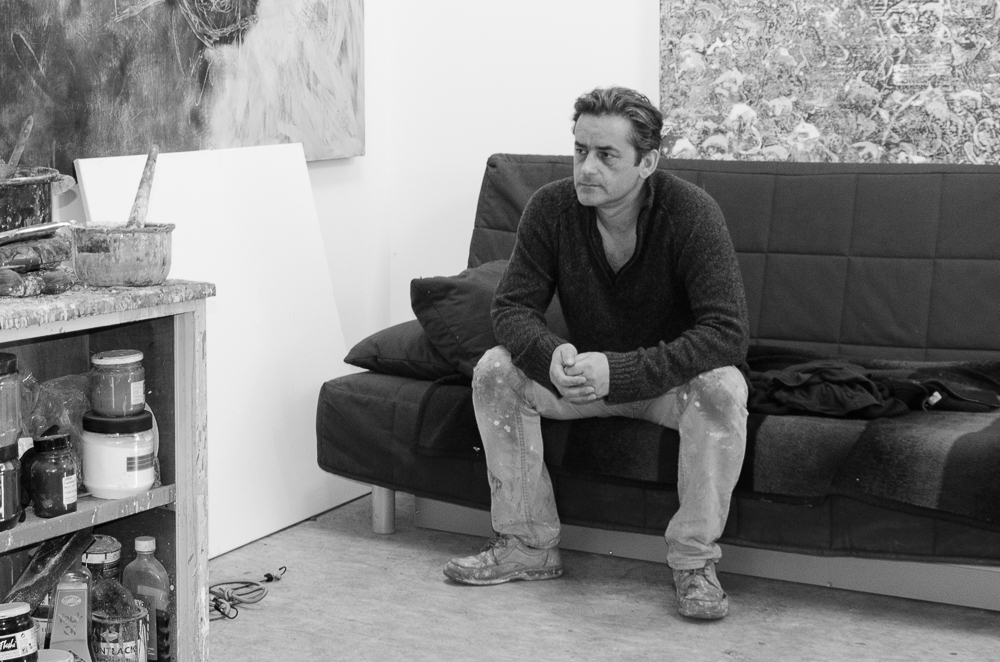
Munich based contemporary artist of long standing, British born
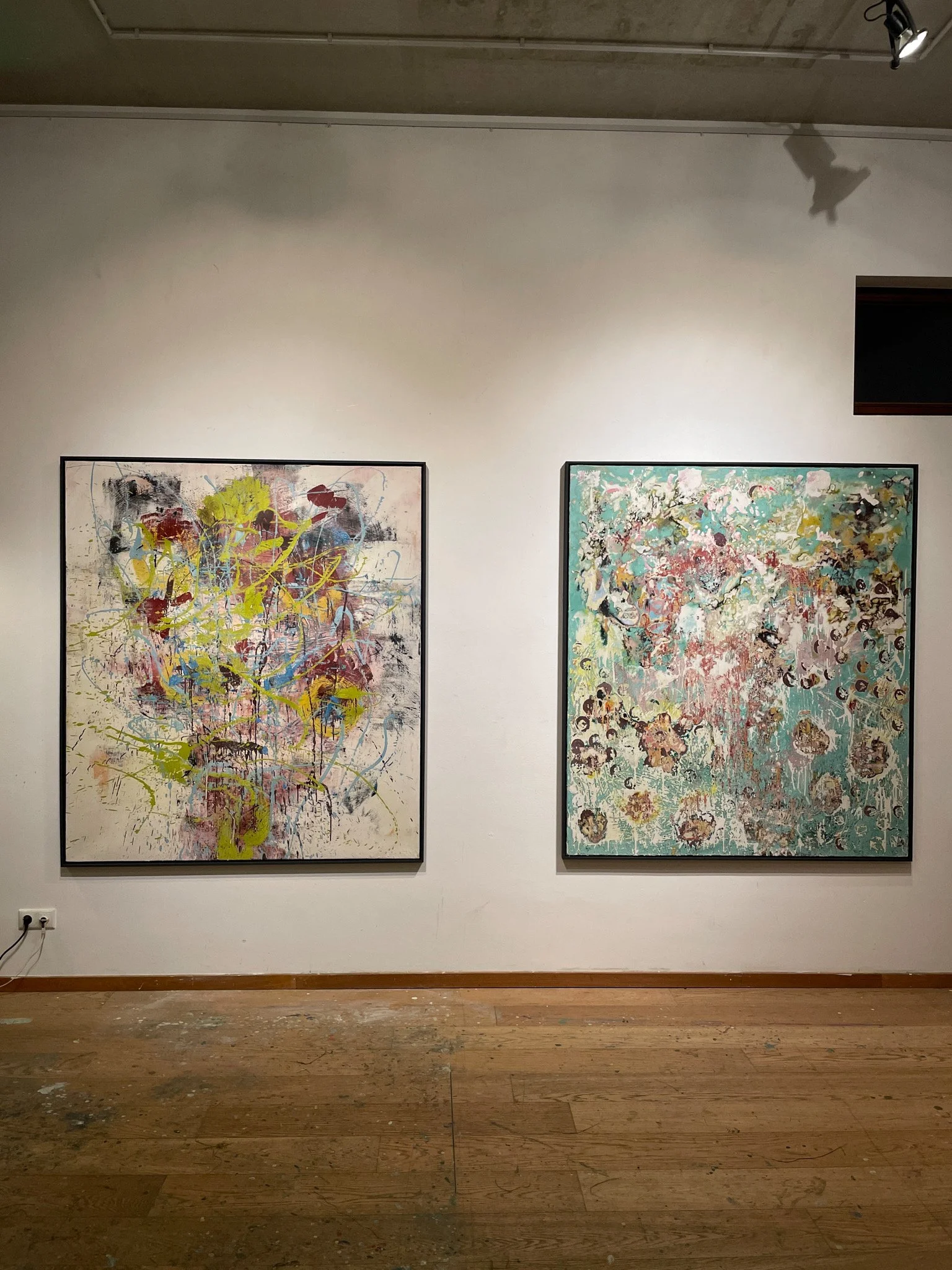
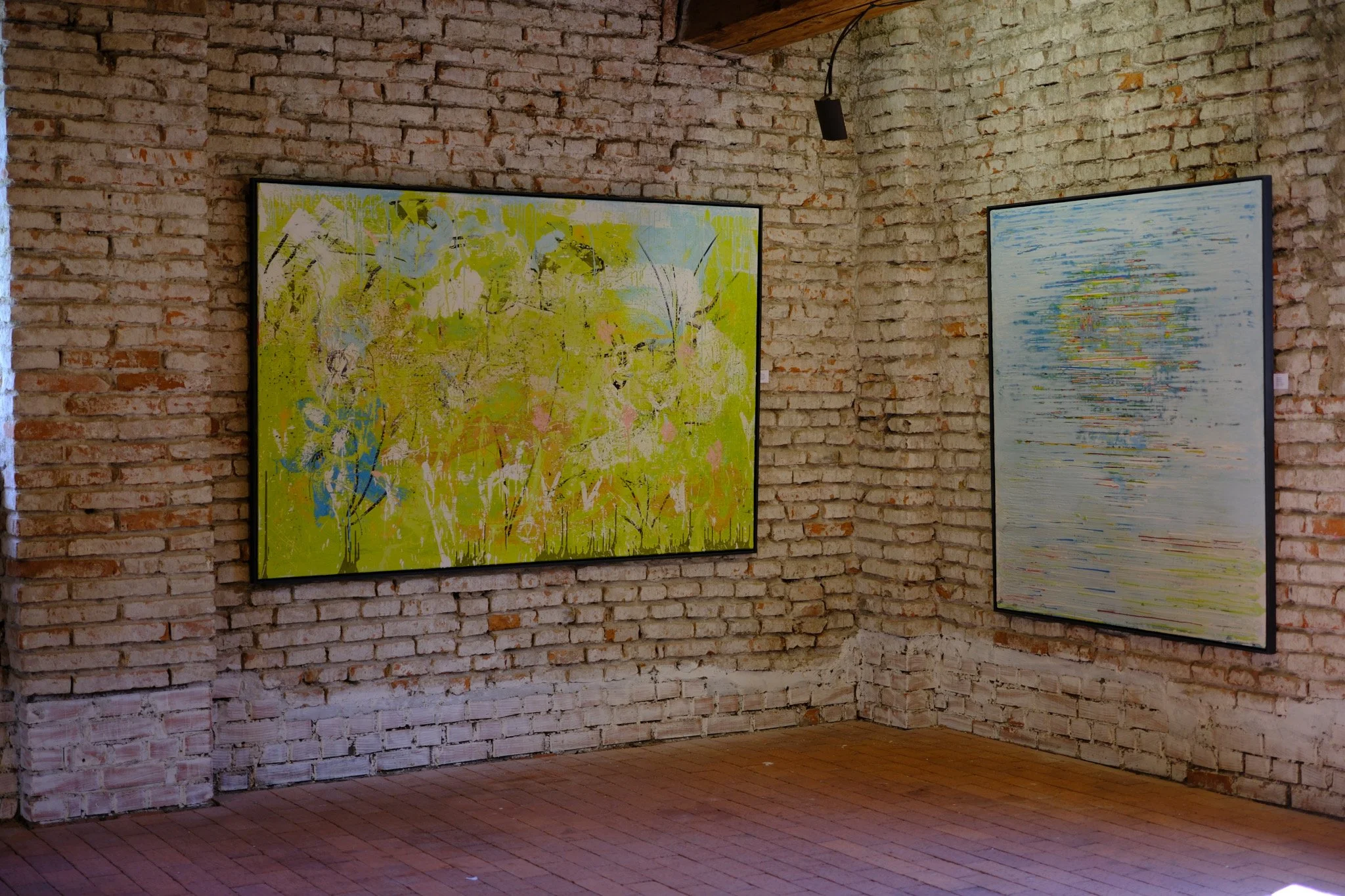
Original approach, which works primarily with gesso and pigment, building materially dense, layered surfaces, referencing ancient techniques but in a contemporary low relief like format
Paintings explore humanity’s personal and group tensions, perceptions, layers and the passage of time through his signature archaeological like structures. Process-driven practice characterised by accumulation, abrasion, and revision.
British trained, but a quiet “”British” revolutionary who eschewed a Munich art school place for artistic freedom
Well received in Bavaria, with works that grace many a private collection and should speak across cultures and places beyond Munich.
See Key Works Below

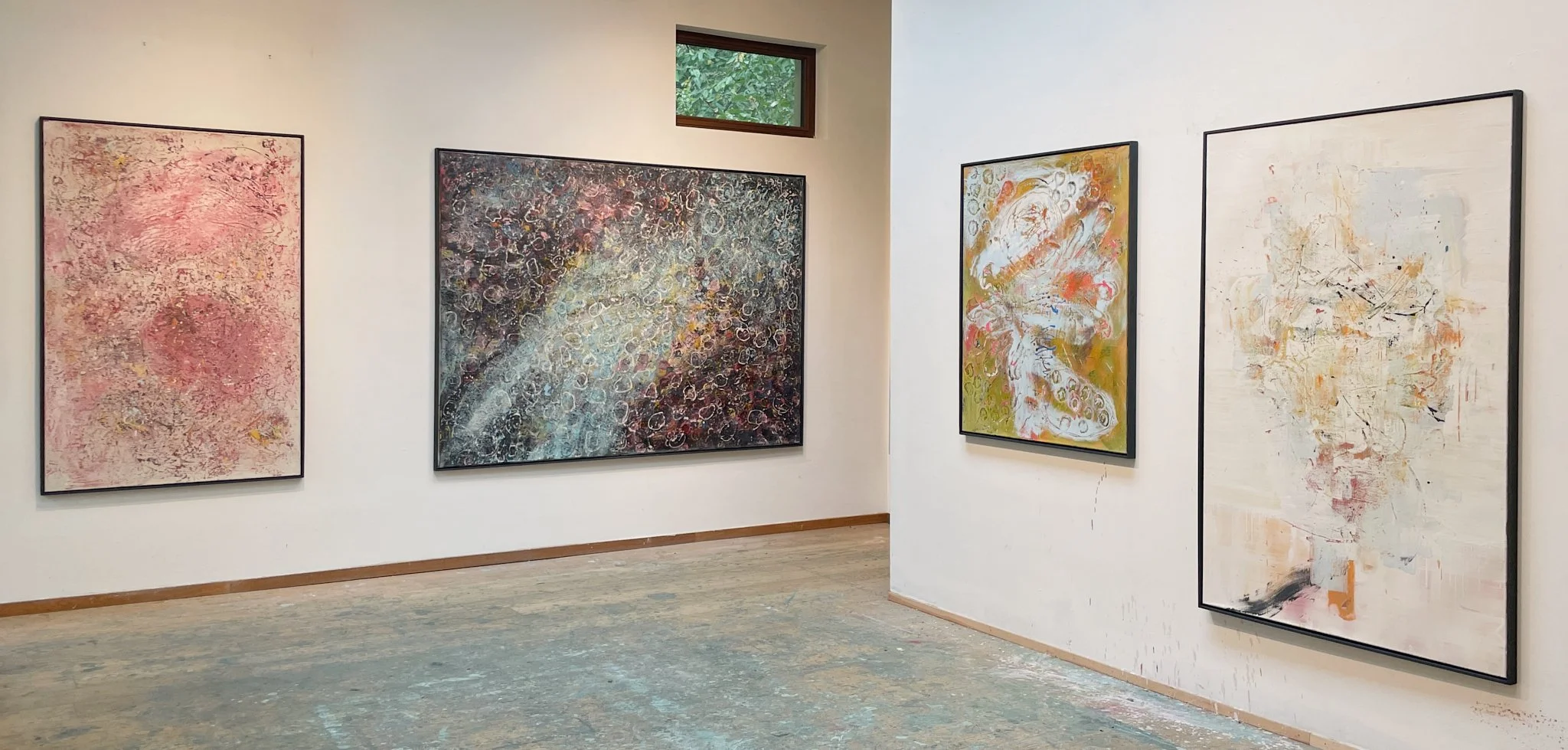
Illuminated Audience - Gesso on Canvas - 230cm x 170cm
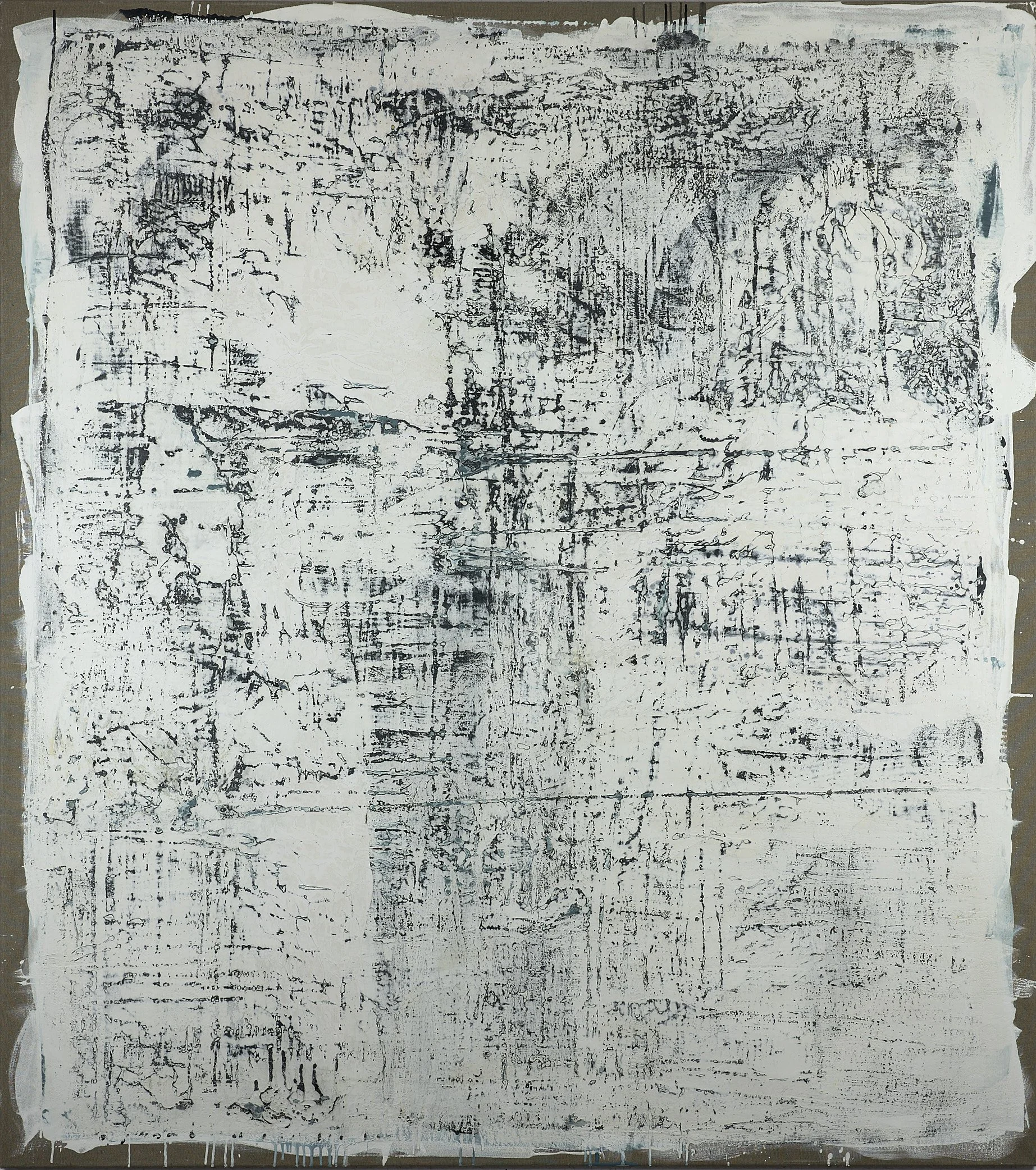
Black and White Master - Gesso on Canvas - 190cm x 170cm
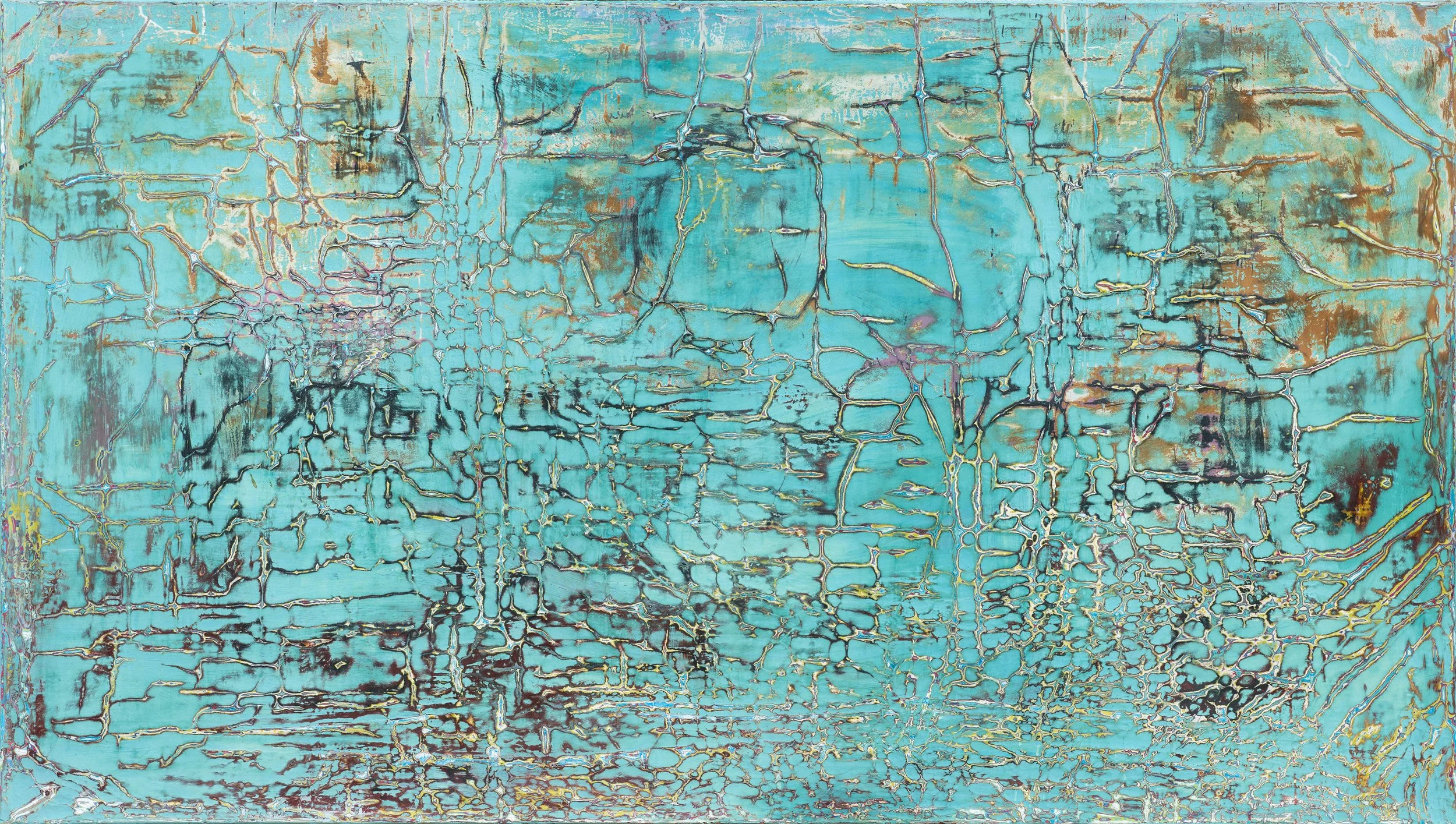
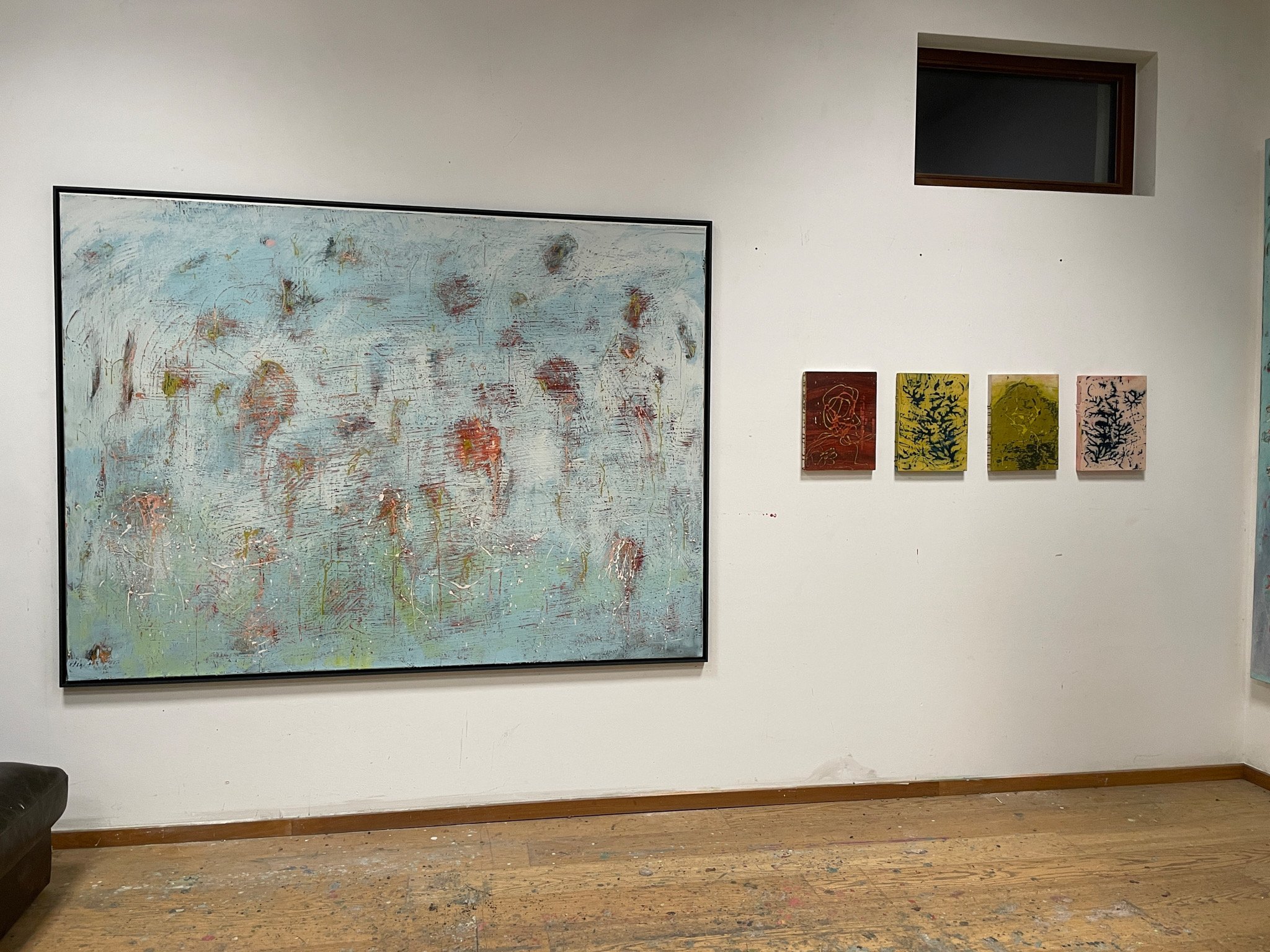
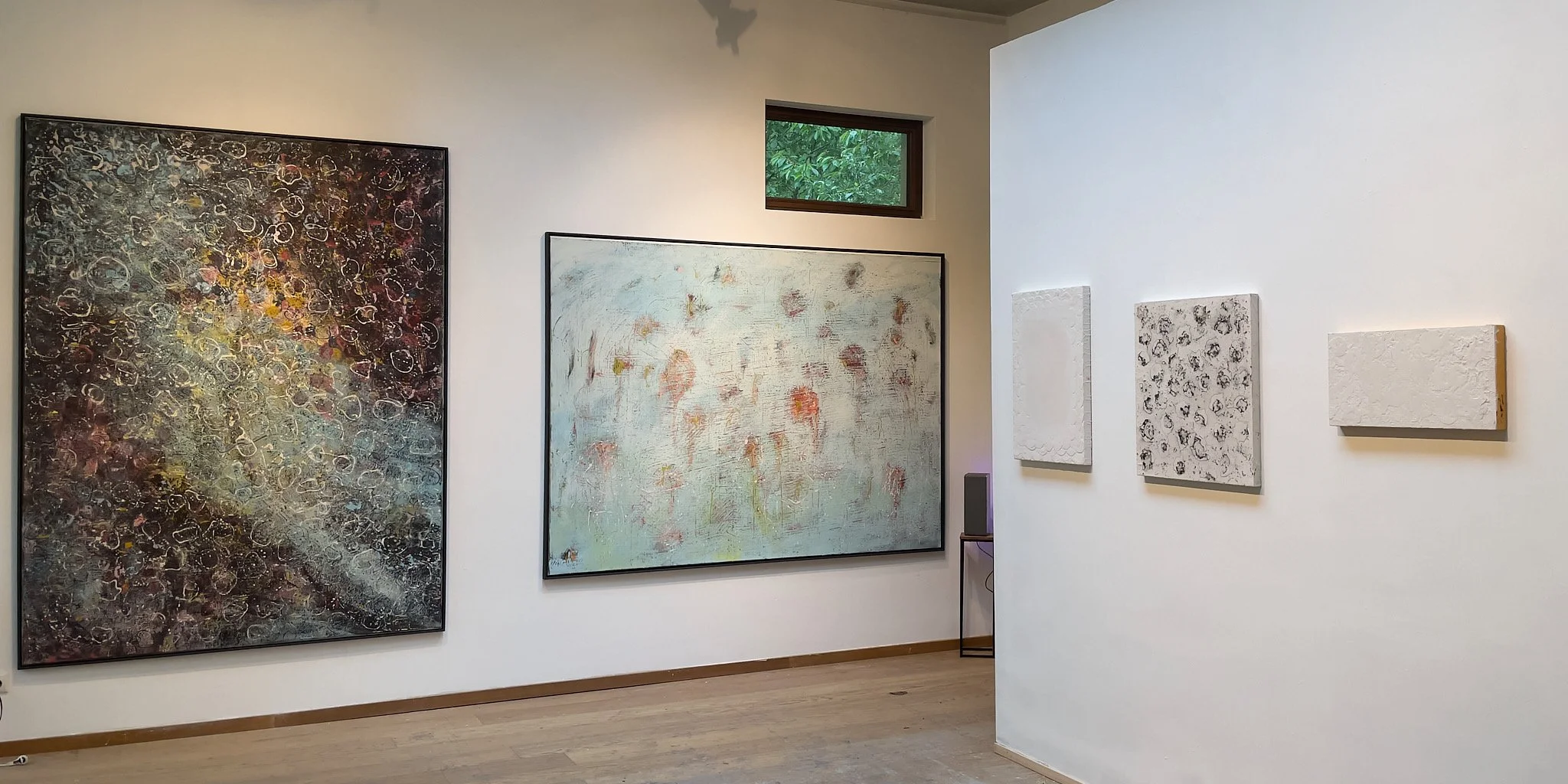
Fractured Azure - Gesso on Canvas - 230cm x 150cm
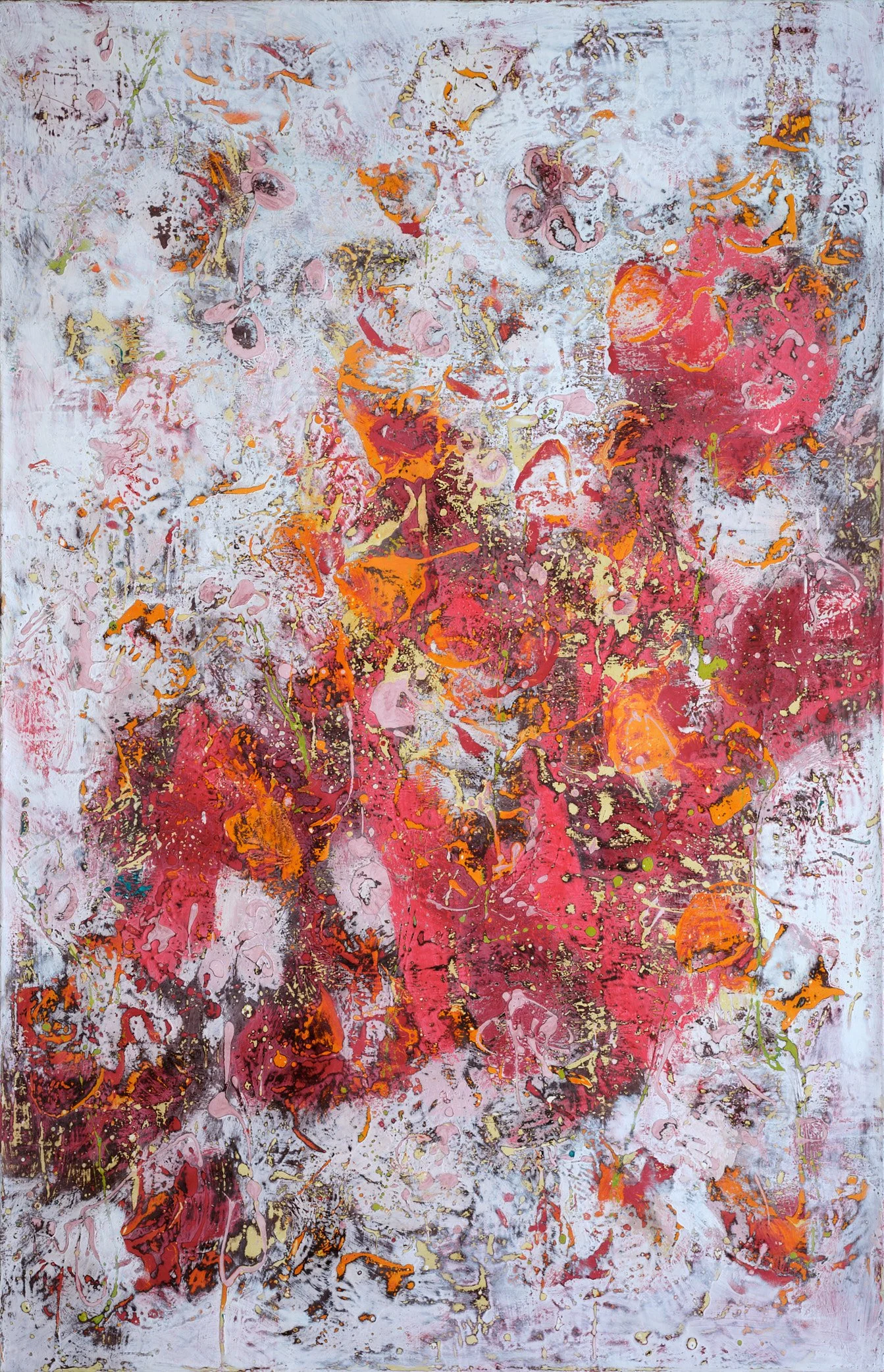
Frutti di Mare - Gesso on Canvas - 170cm x 110cm
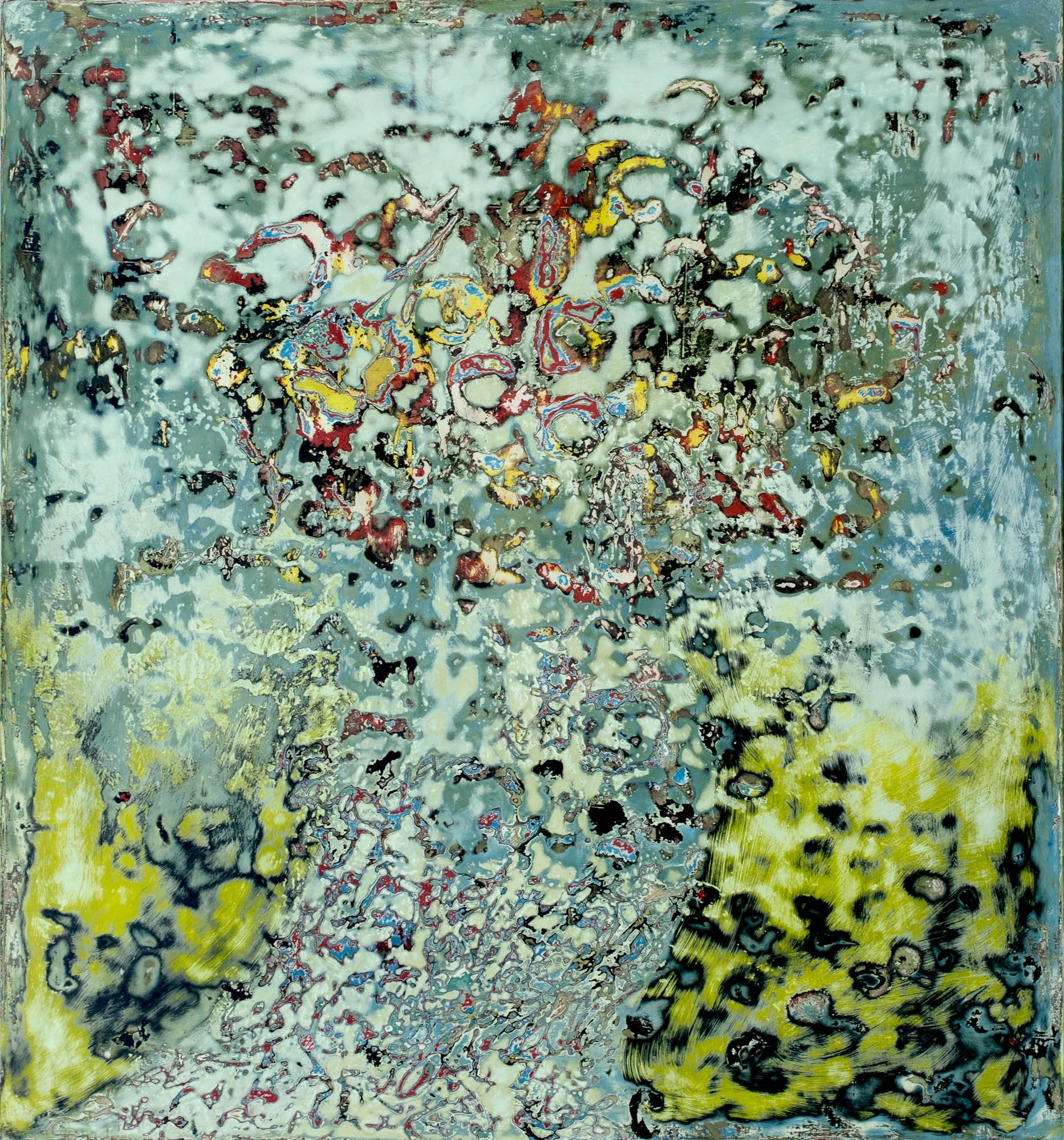
Wishing Tree - Gesso on Canvas - 160cm x 140cm
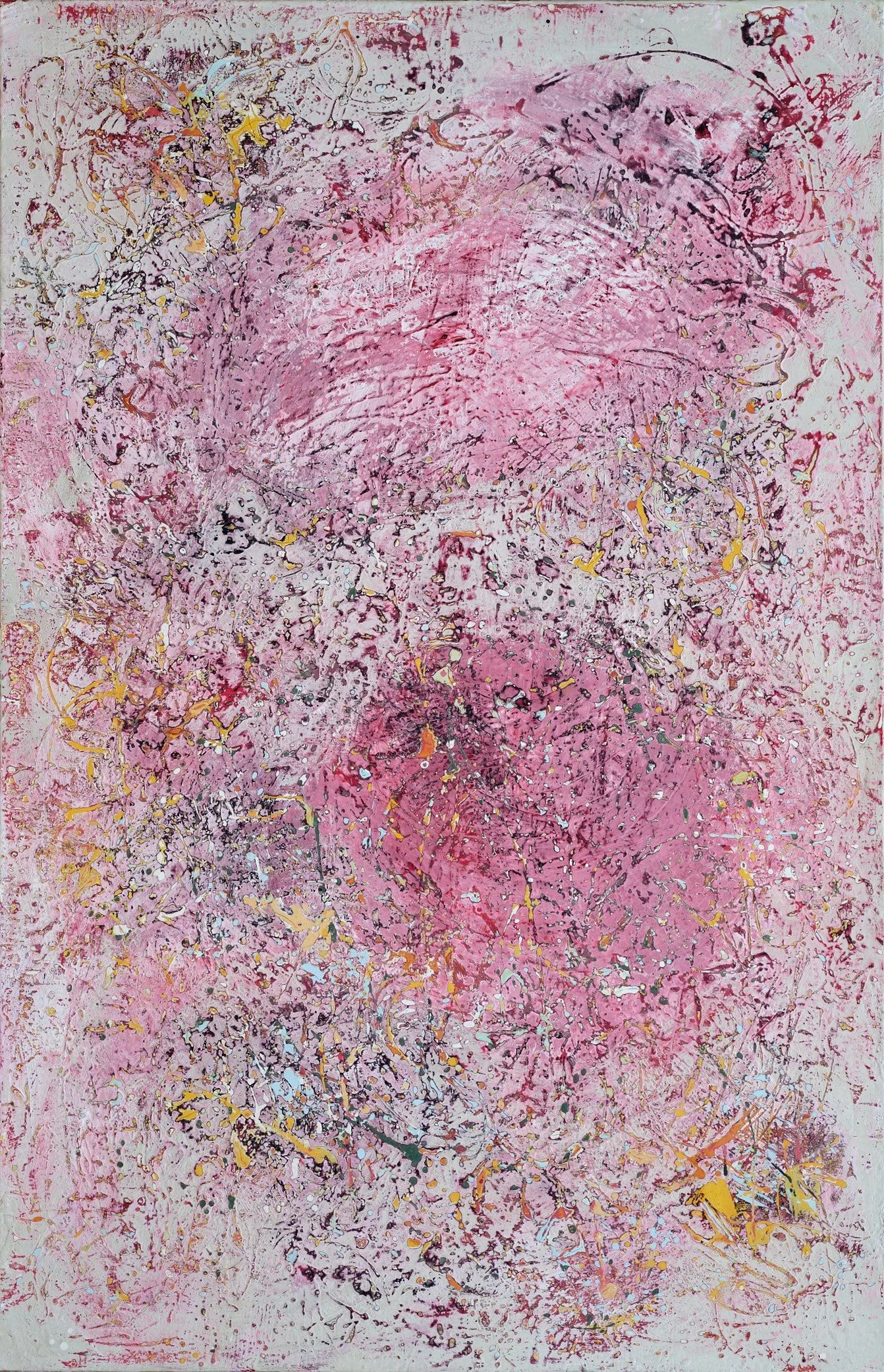
Fingerprint - Gesso on Canvas - 170cm x 110cm
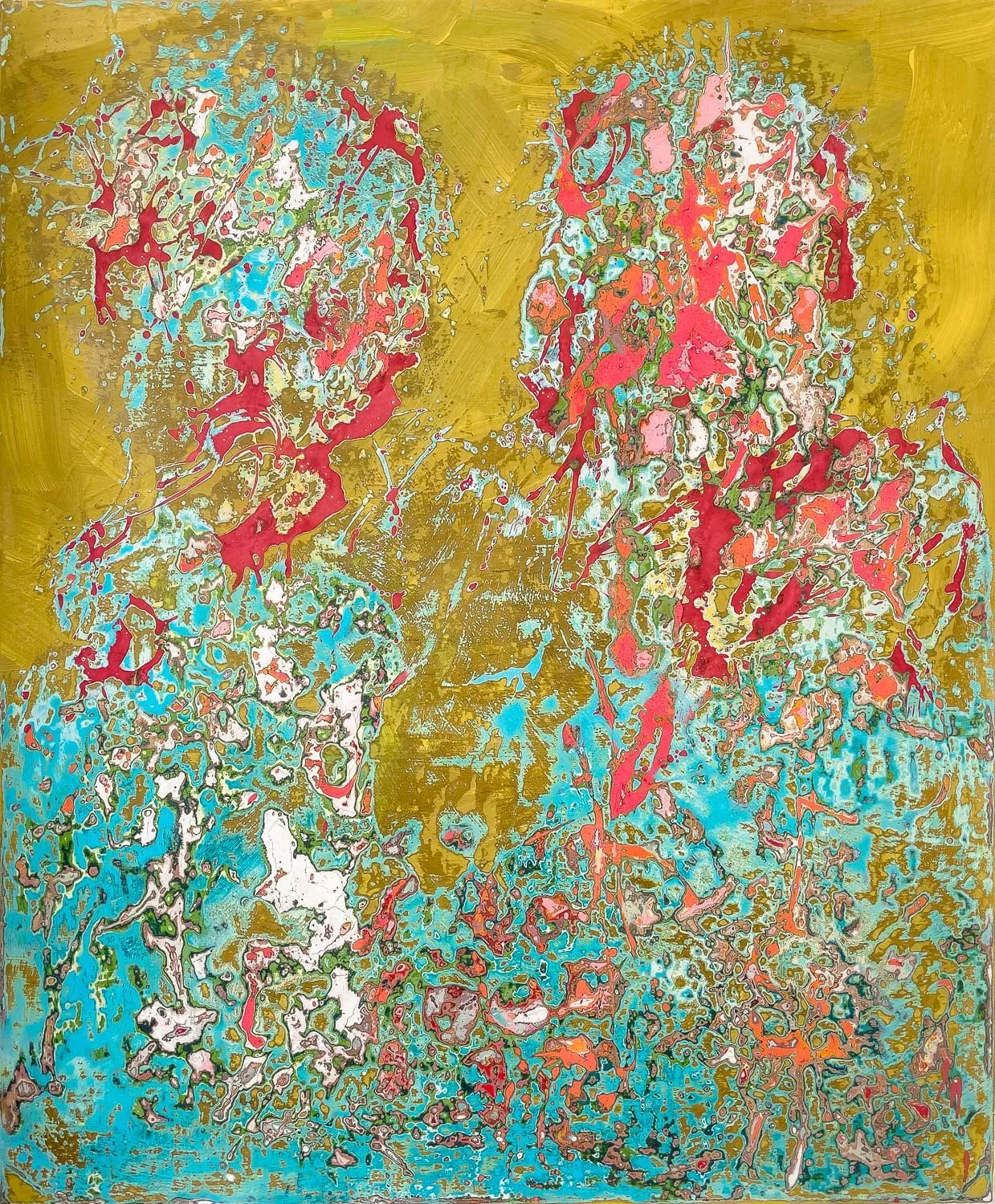
The Lovers - Gesso on Canvas - 120cm x 100cm
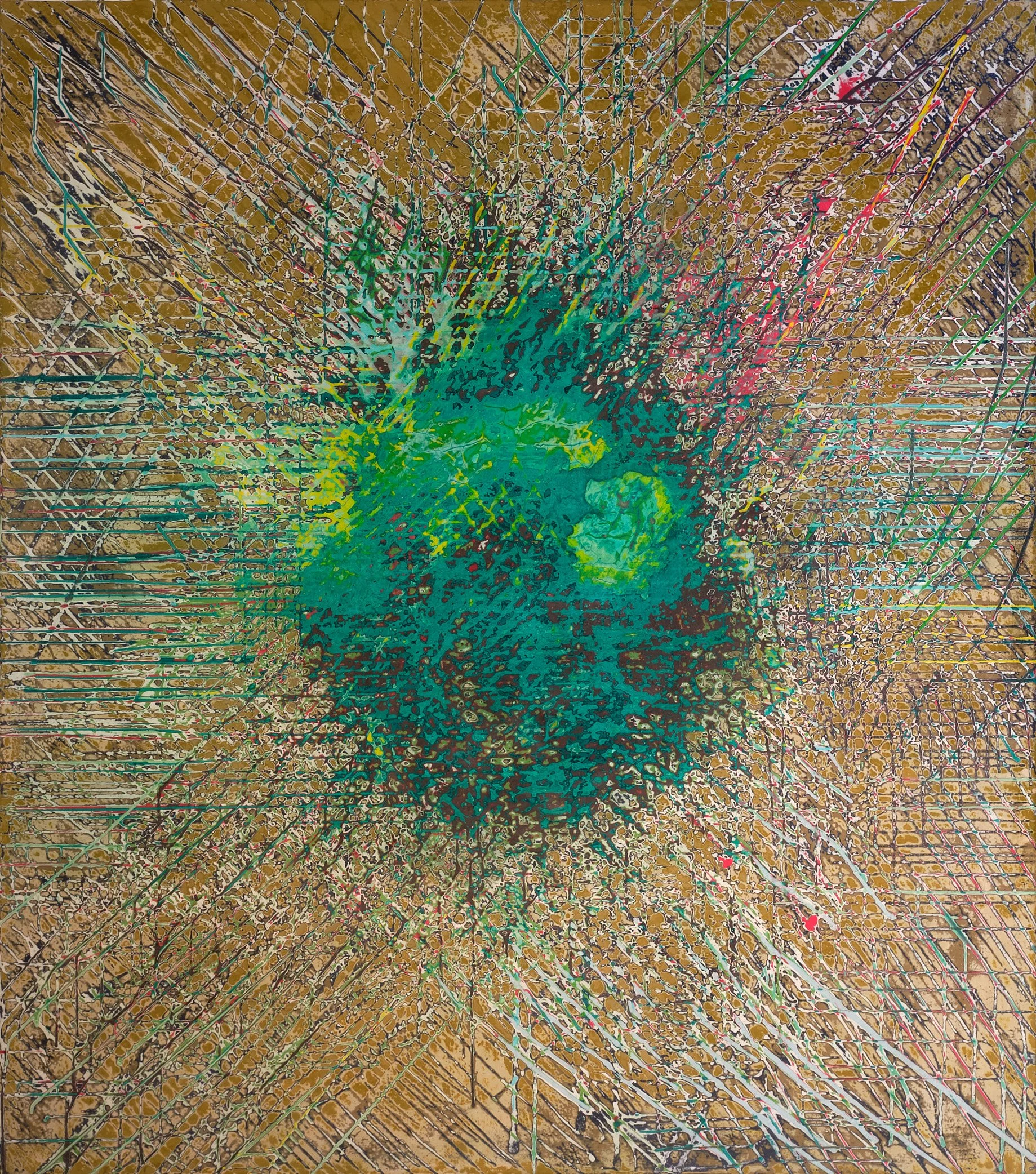
Emerald Core - Gesso on Canvas - 170cm x 150cm
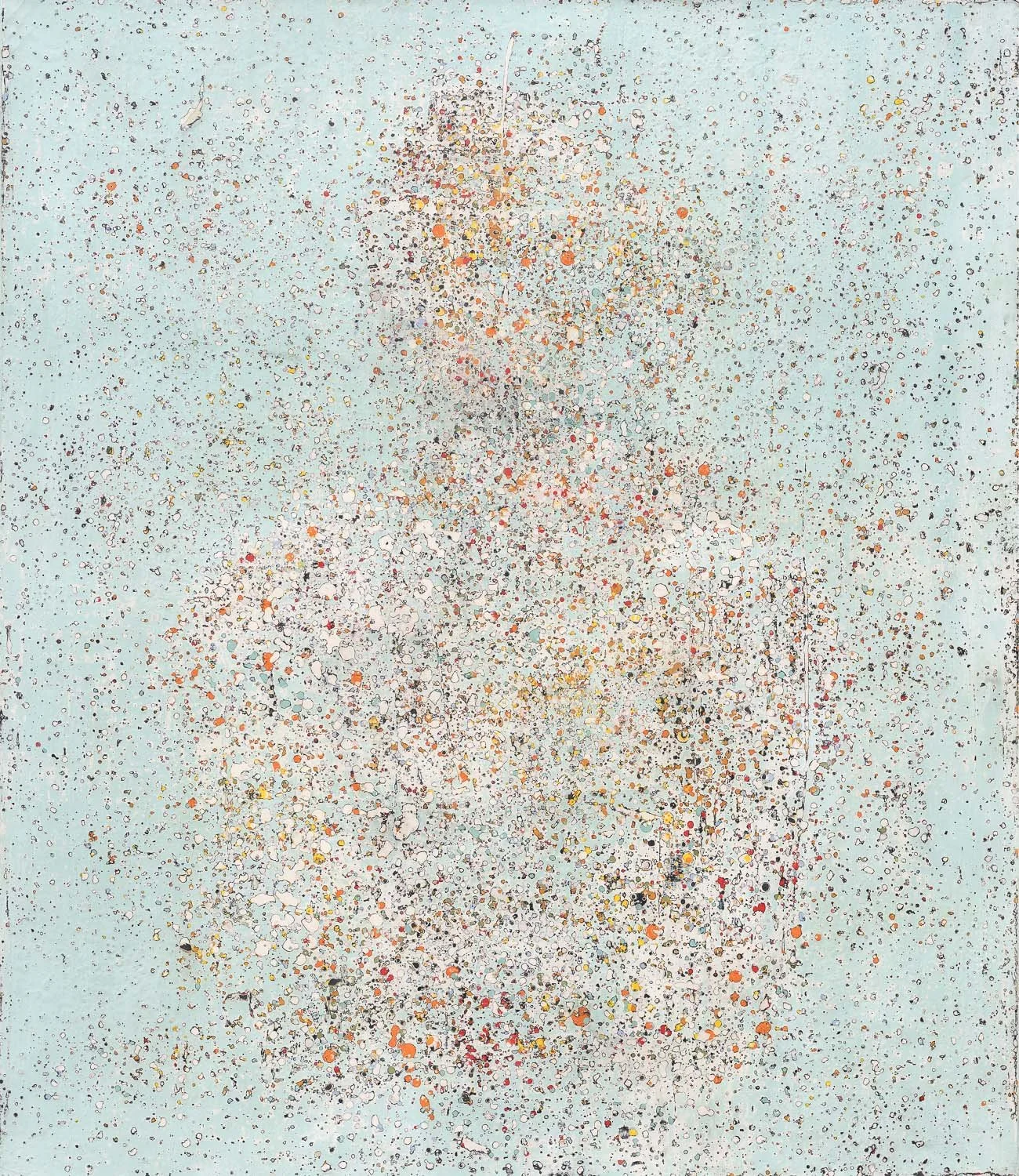
Spot Sculpture - Gesso on Canvas - 150cm x 130cm
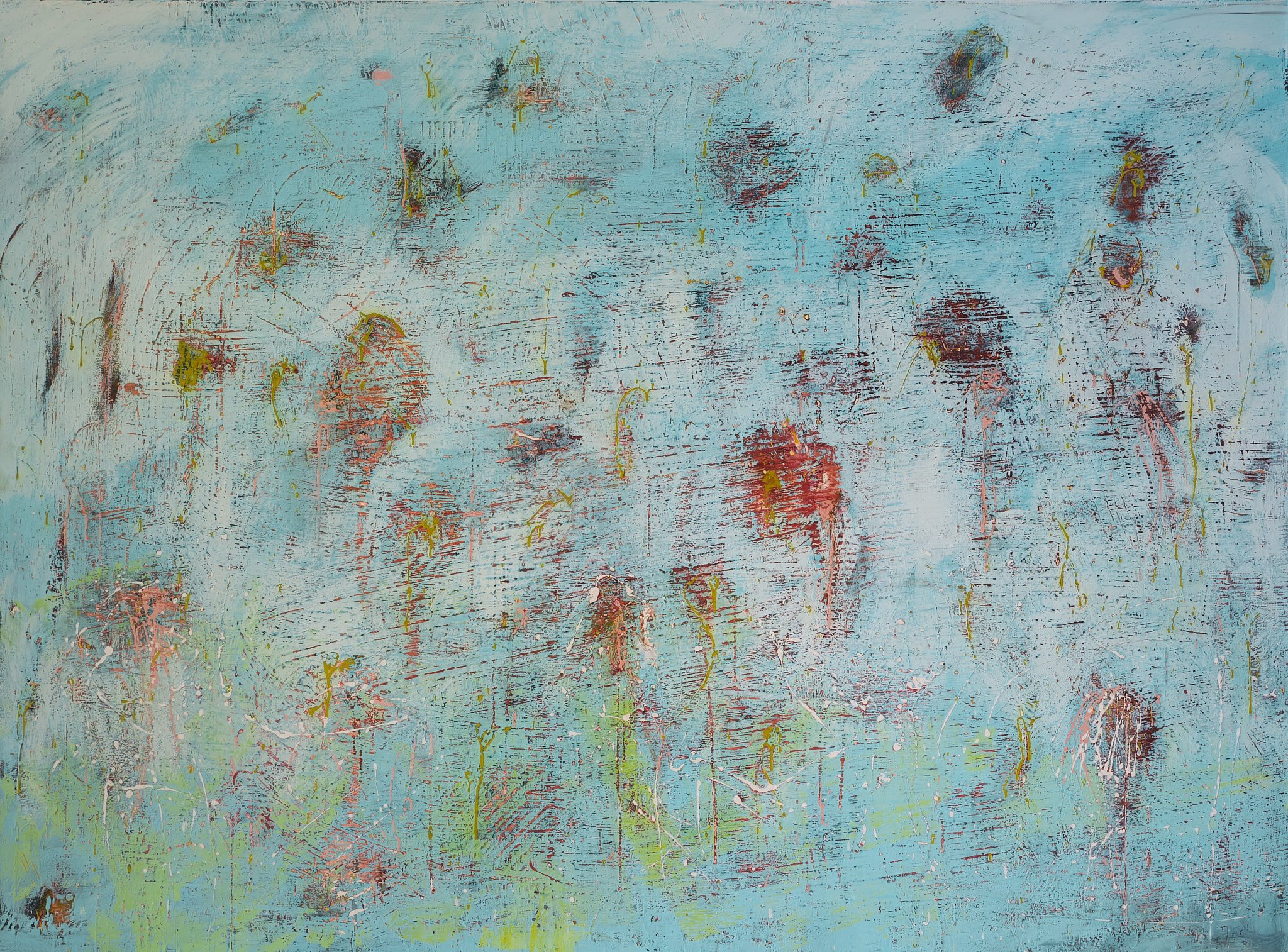
Free Spirit - Gesso on Canvas - 230cm x 170cm
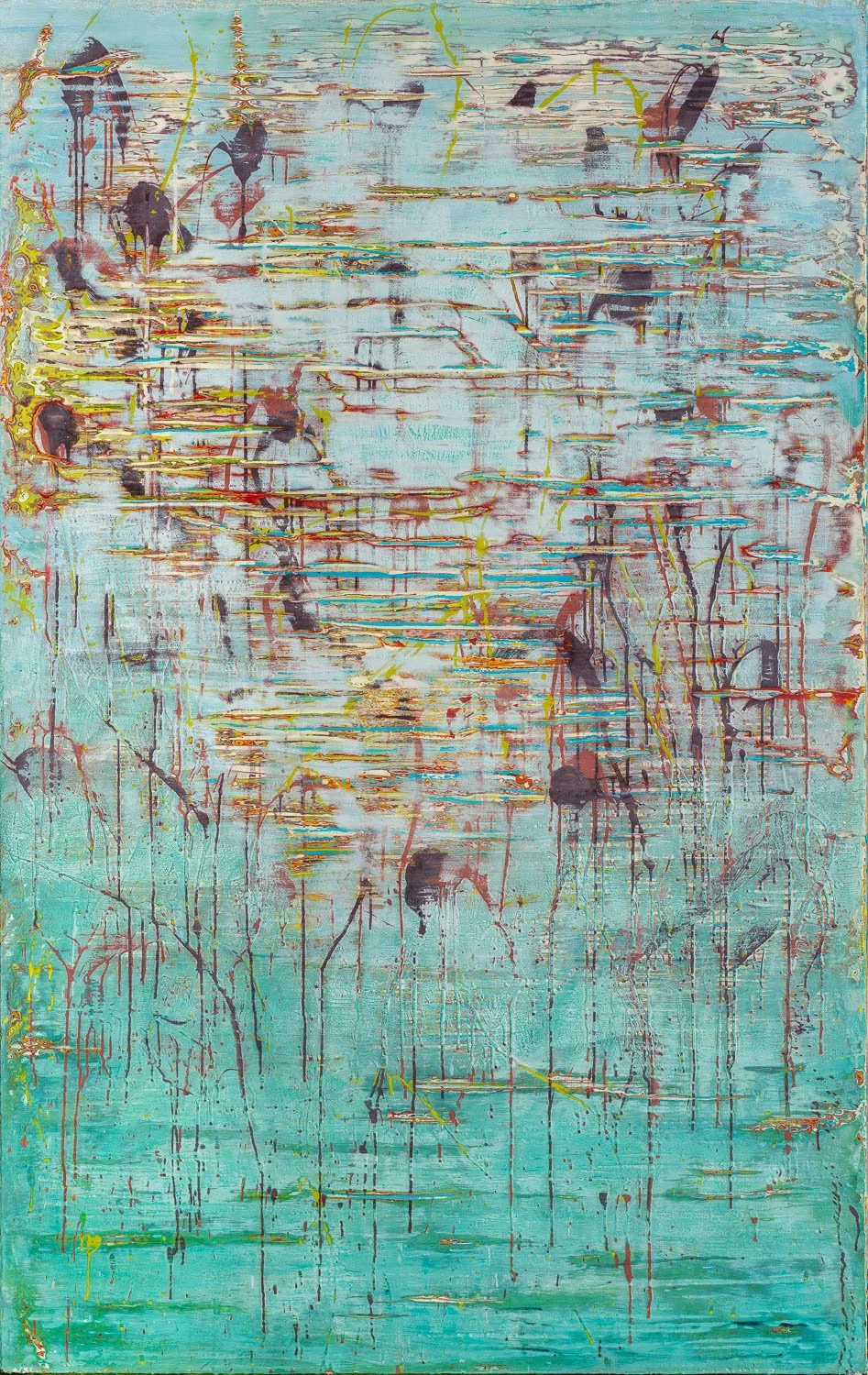
Ripples - Gesso on Canvas - 190cm x 120cm
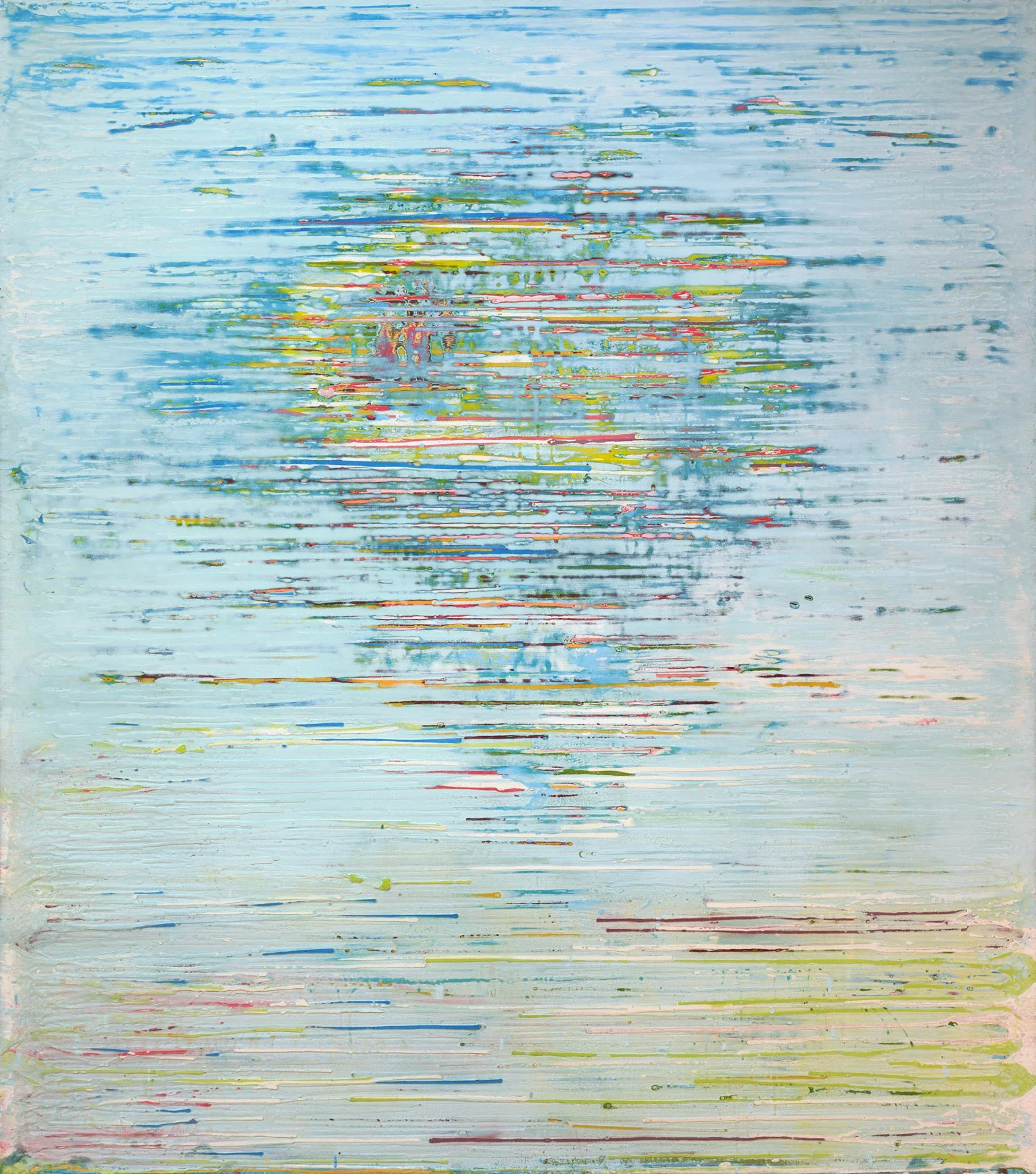
Hot Air Balloon - Gesso on Canvas - 170cm x 160cm
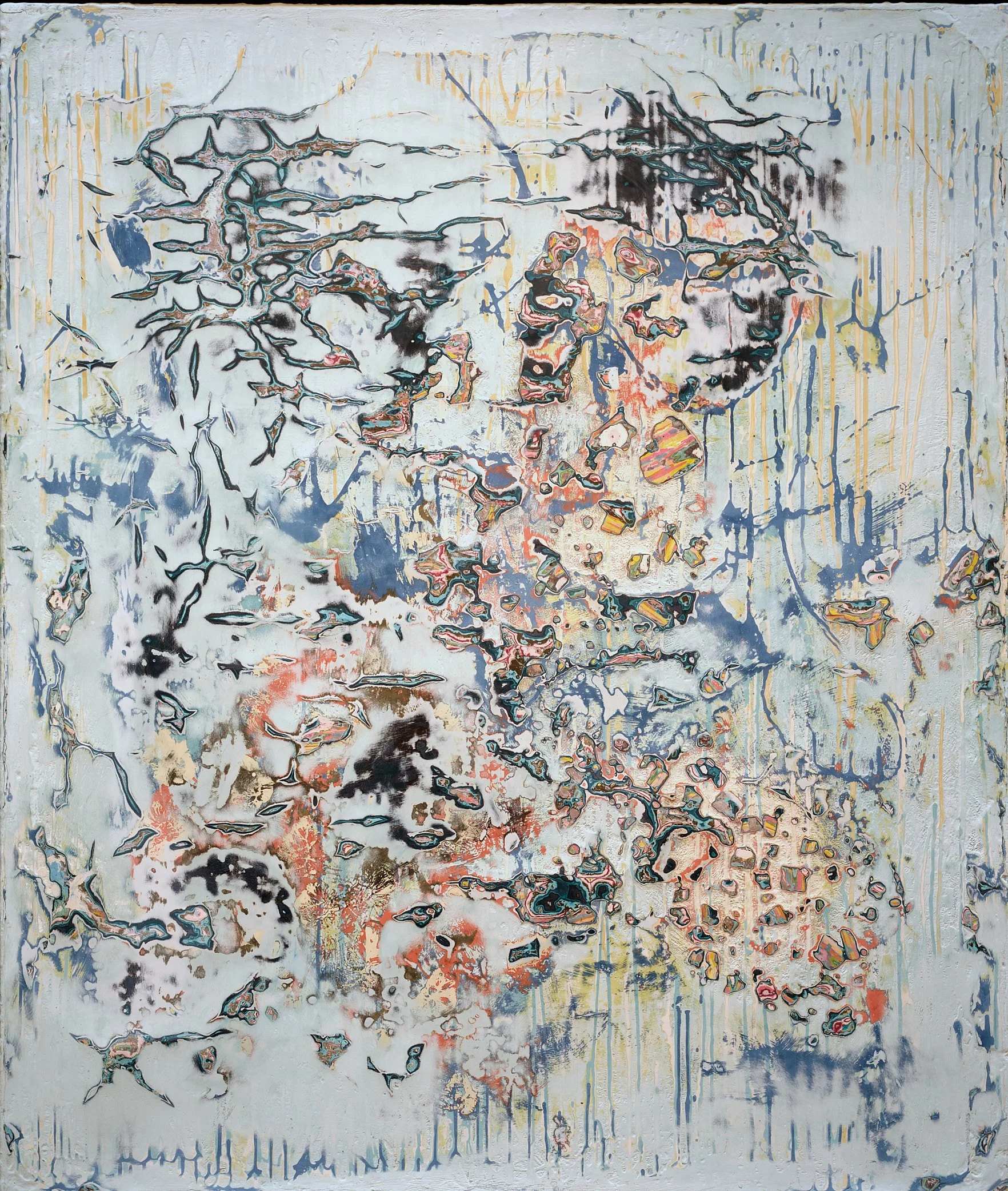
Statuesque -Gesso on Canvas - 130cm x 110cm
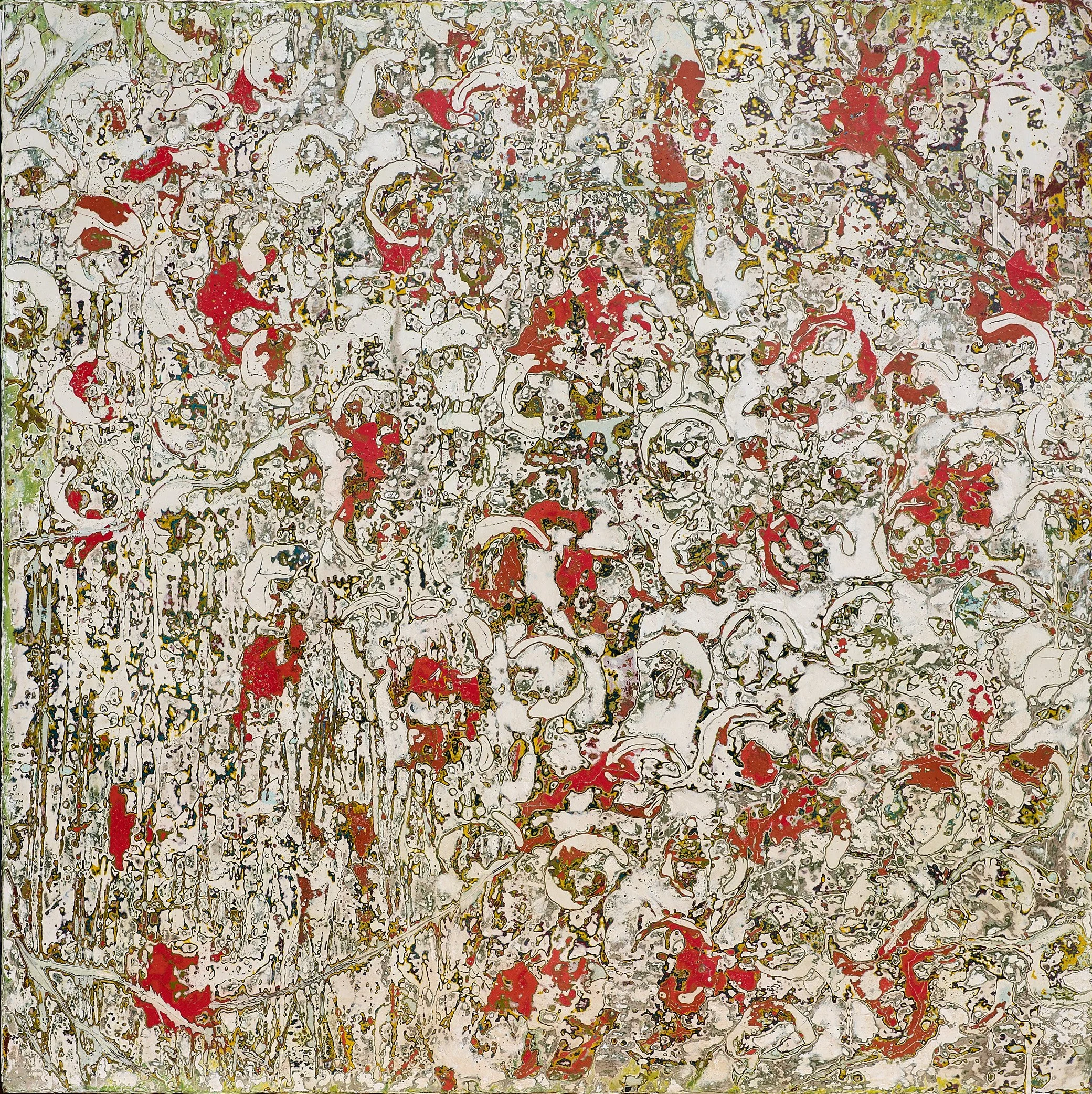
Fragmented Section- Gesso on Canvas - 120cm x 120cm
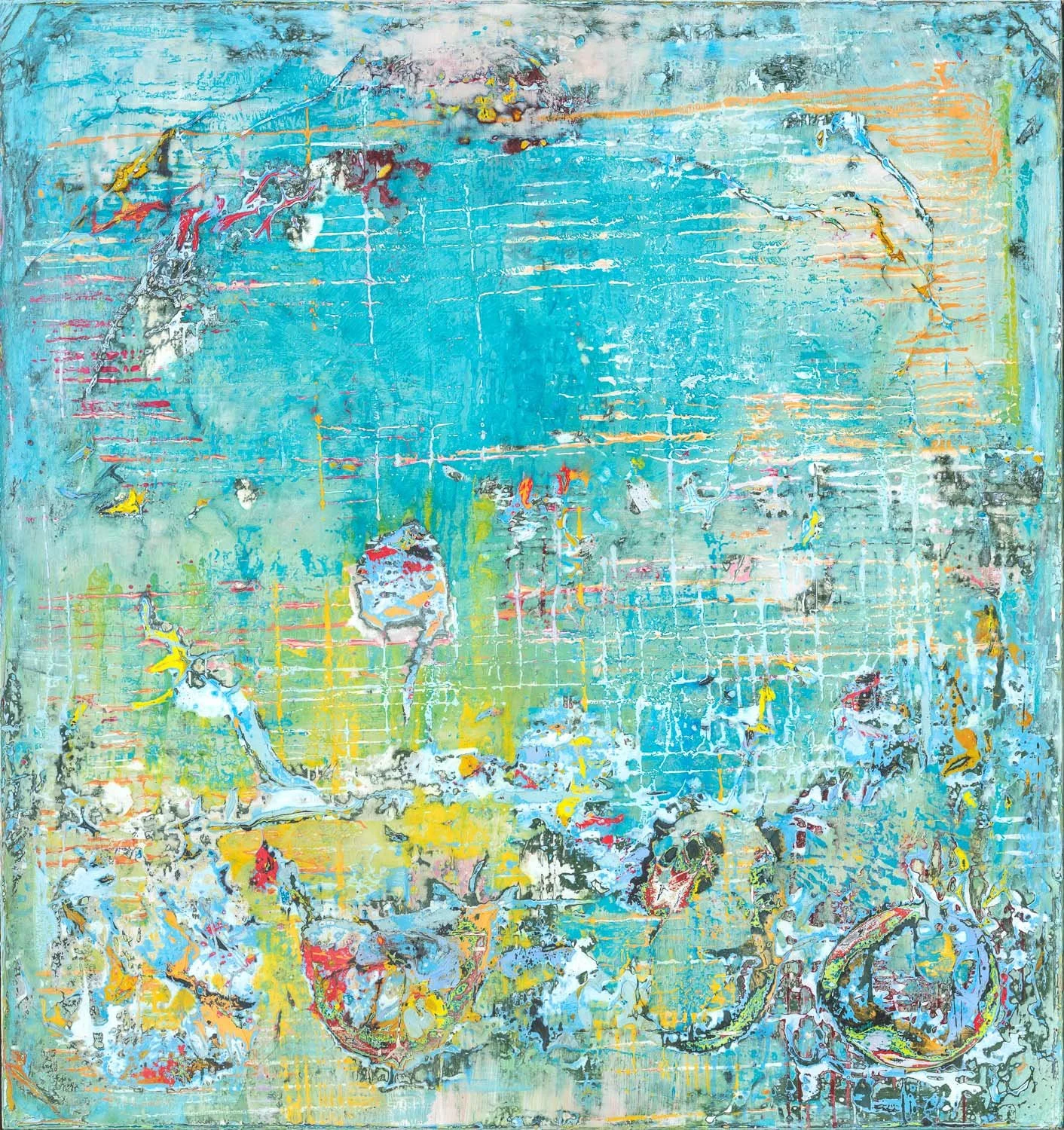
Metaverse - Gesso on Canvas - 170cm x 160cm
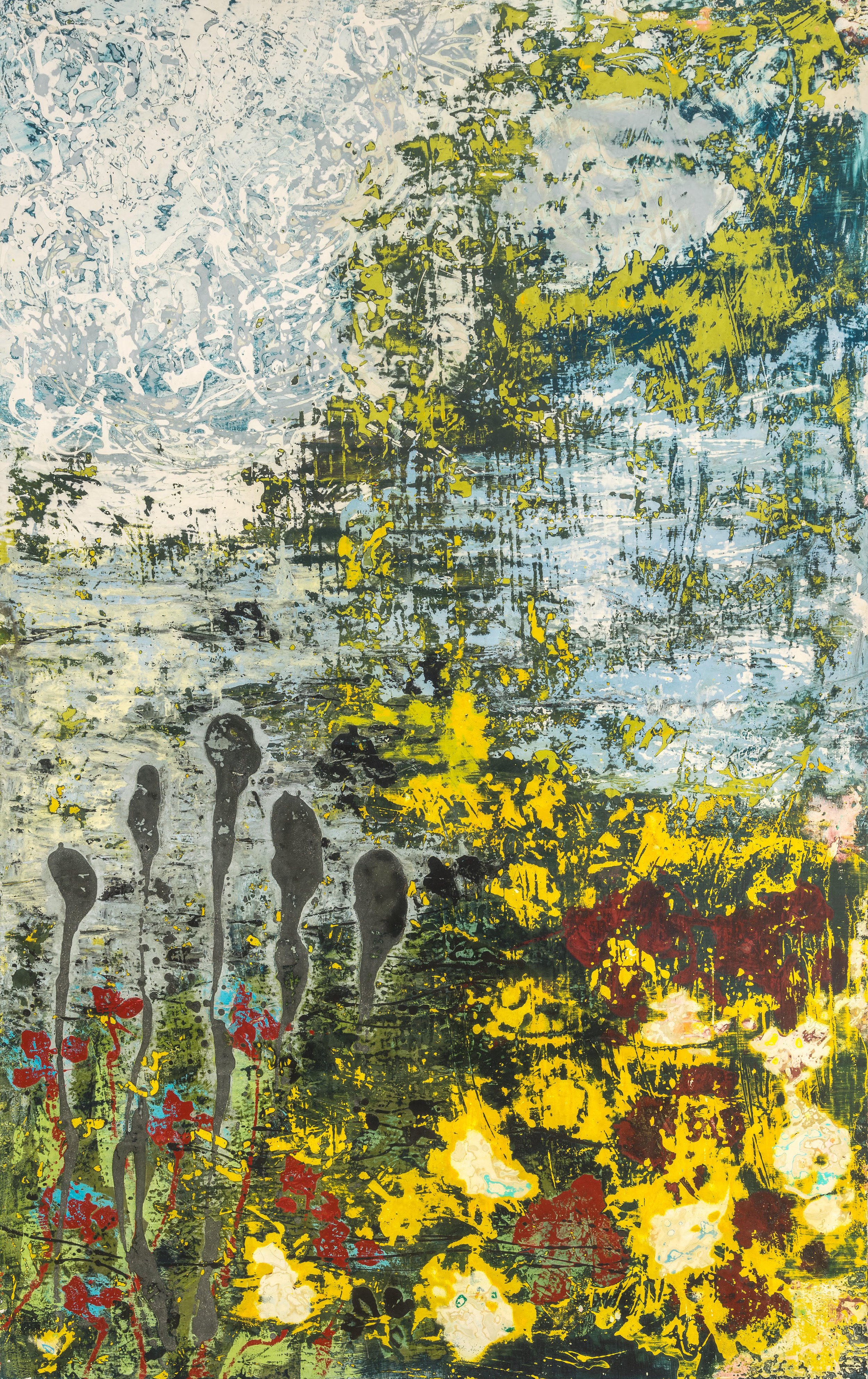
Aussicht (the Watcher) - Gesso on Canvas - 200cm x 120cm
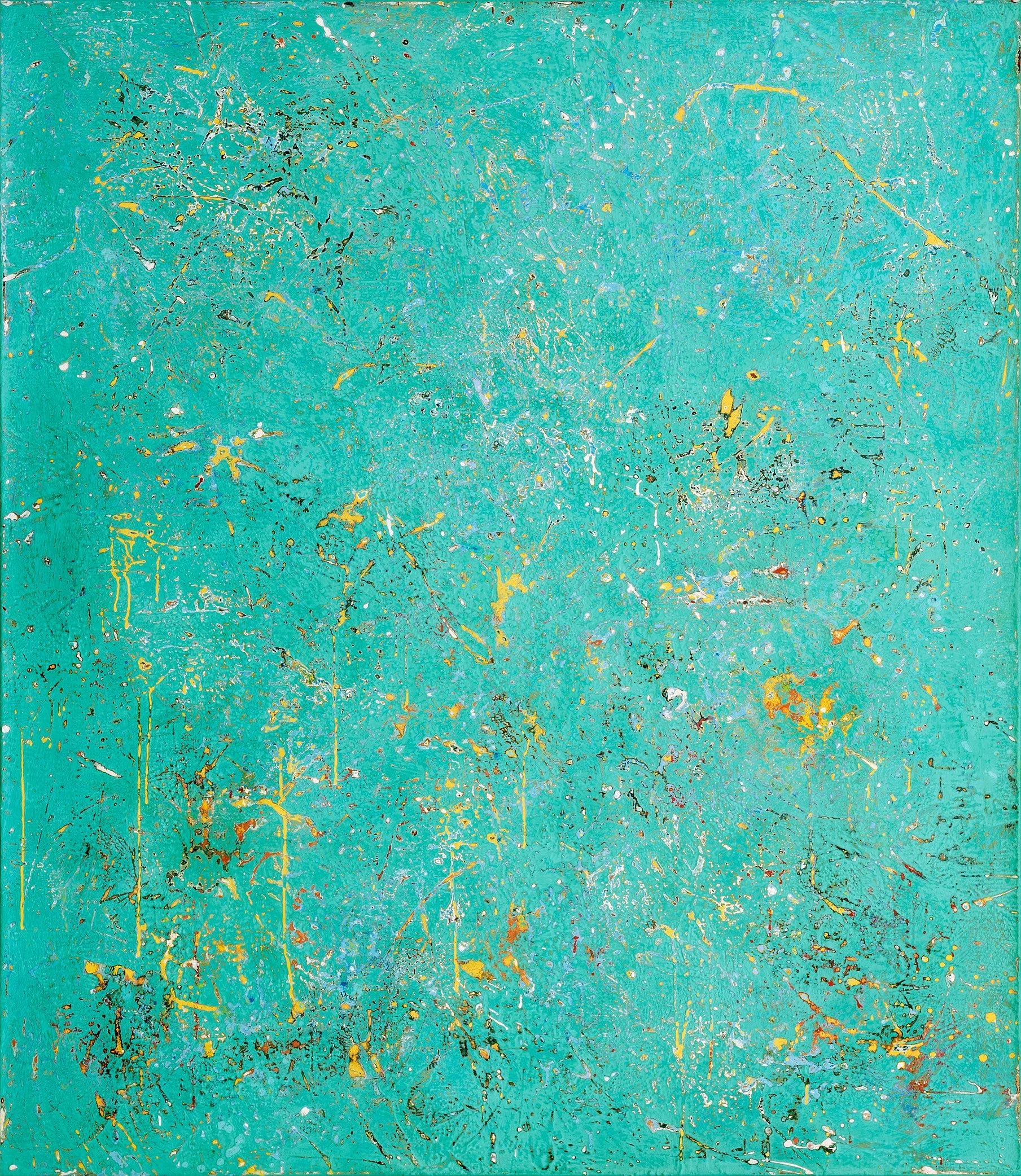
Aqua Midnight 2- Gesso on Canvas - 150cm x 130cm
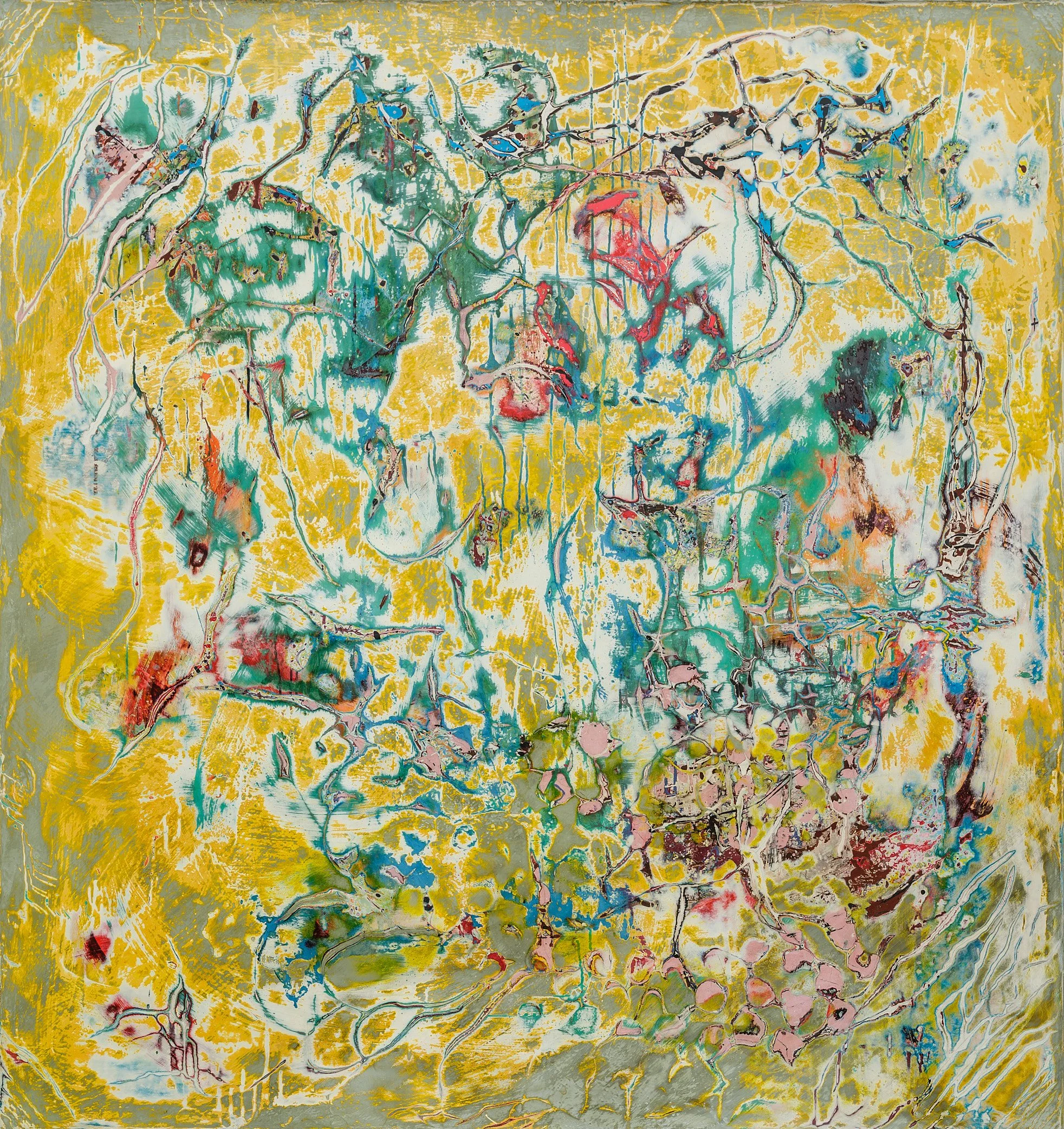
Melange - Gesso on Canvas - 170cm x 160cm
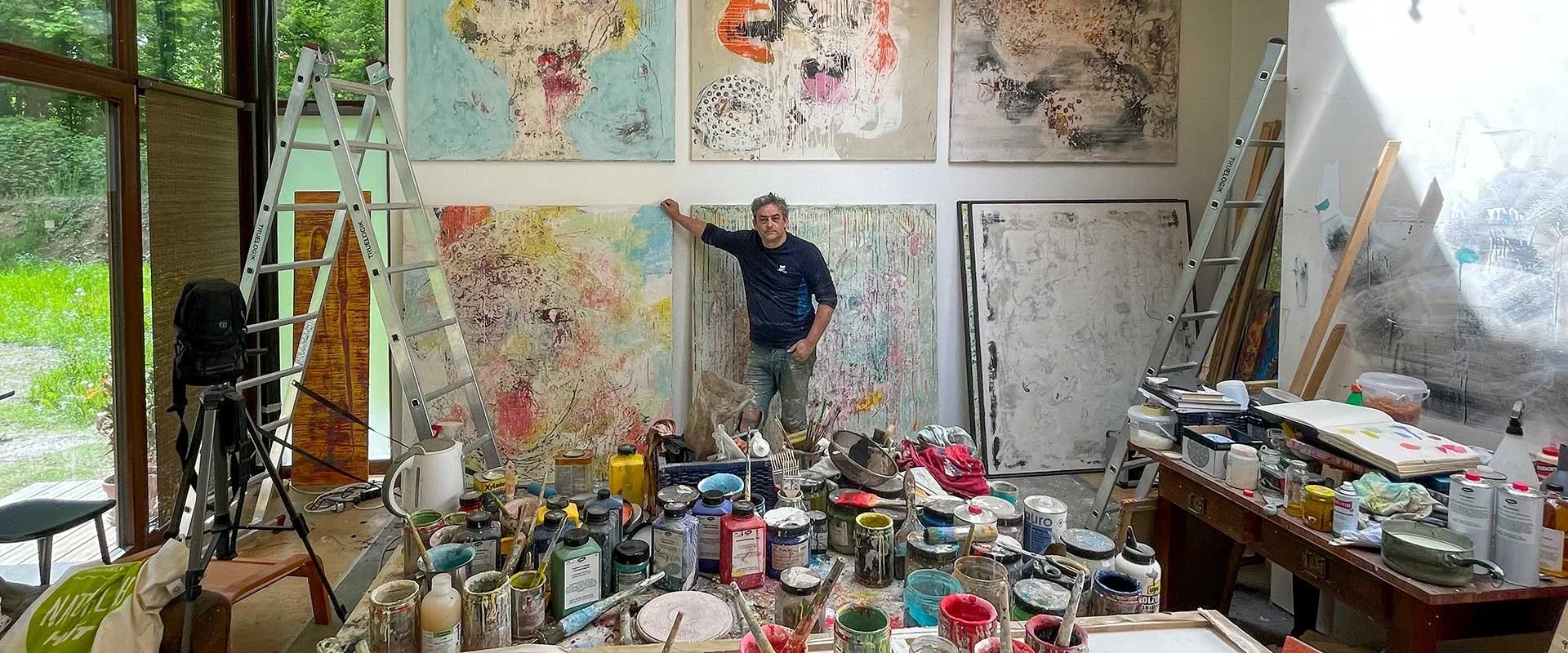
How He Works - Ancient Processed Layers, Sculpted by the Here and Now
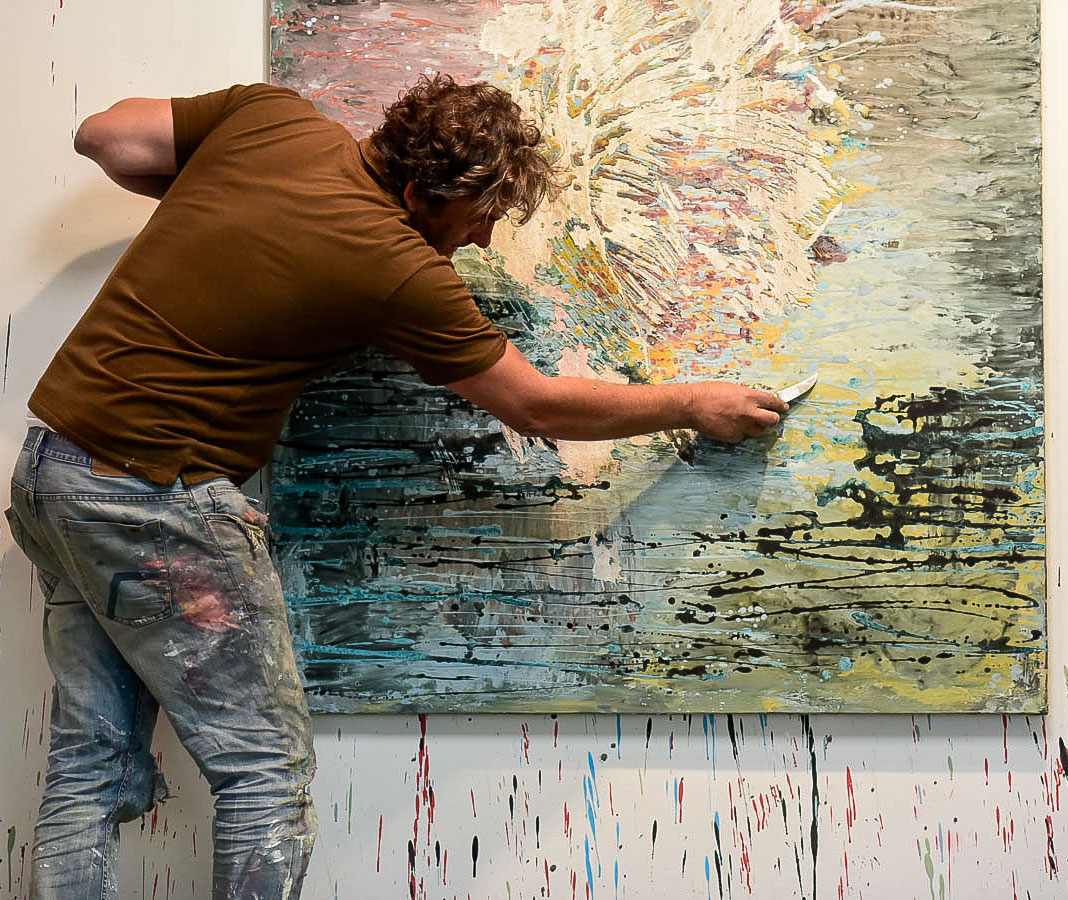
1. Building the Ground: Hot Gesso Layers
I begin with thick, creamy coloured gesso often applied by hand. As it cools and hardens, it sets into a fluid terrain on the canvas or wooden panel.
These first moments are critical: I need to touch, spread, and feel the surface to sense its emerging scale and dimension. It’s in that fluid transition, when the paint dries, that the first signs of tectonic structure emerge.
2. Painting × Sculpture: Add, Then Reveal
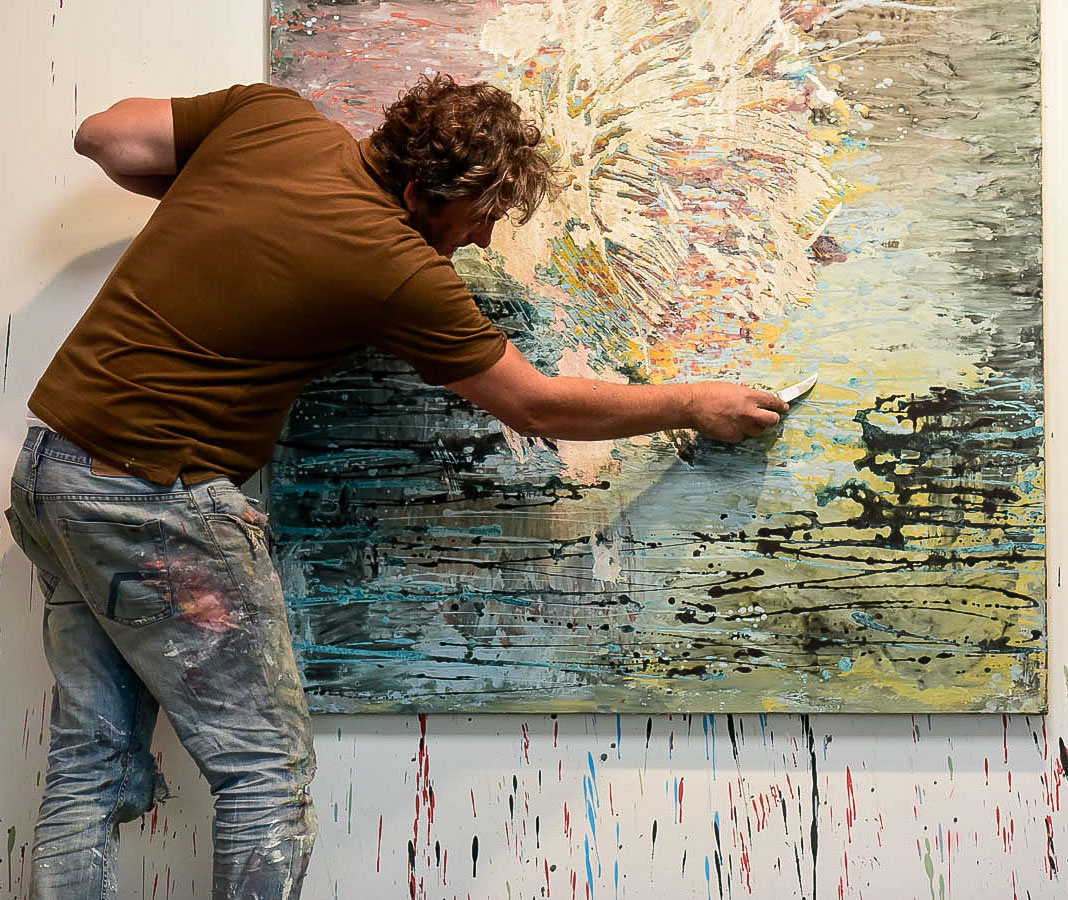
My work is both additive and subtractive. I layer colour upon colour, carefully calibrated for temperature and interaction. Each decision, what hue, what thickness, where to place it, is balanced against intuition and iteration.
Once the paint is set, I start carving. Using sanding machines or scalpel blades, I excavate the surface, scraping, carving, revealing hidden layers underneath. This carving, what I call grattage, creates relief-like effects in the paint. Horizontal and vertical shifts, fissures, silhouettes all may emerge, unexpected, unpredictable, open to interpretation.
3. Recycling the Process
Sometimes, fragments of paint scraped from earlier layers are collected and reintroduced to the piece, as if memories or worn fragments are recycled into a new whole. This interplay of construction and erosion, of forming and revealing, is central to the work.
4. Sealing and Finishing
Once I’m satisfied, the surface reading as balanced, I seal it with a layer of wax. This protects the fragile gesso, enhances depth and subtle shine, and stabilizes the form. The final surface is tactile, structured, and responsive to light and proximity.
EXHIBITIONS
2024 - Kunst-Tage 28 - 30 June Moosburg an der Isar
2023 - Truderinger Kunst-Tage, (April 6. - 10.) München
2022 - Halle 50 Domagk Atelierhaus. Made in Wiede-Fabrik. München
2019 - Van Gogh Gallery, Madrid. 17th June - 1st July
2019 - 'Mondschein' Haus 50 Domagk Atelierhaus München. 16th June
2016 - Neue Stadt Museum 'Modern trifft Barrock' (Dominikus Zimmermann). Landsberg am Lech,
2010 - Domagkstr. Halle 50 'Art Crime' Group exhibition. München
2009 - H20 Group exhibition. Müchen
2003 - Domagk Ateliers Open art studios, München
1993 - Domagk Ateliers Open art studios, München
SOLO EXHIBITIONS
2023 - Max Planck Institute for Psychiatry. Solo Exhibition. München
2022 - Oberberg Klinik München
2017 - Praterinsel Summer Gallery Einzelnausstellung. Curator Anne Uhrlandt. München
2016 - Max Planck Institute for Psychiatry. Solo Exhibition. München
2015 - Praterinsel Solo Exhibition, München
2014 - Praterinsel. Solo Ausstellung, München
Invitation to Collaborate
We invite galleries, curators, and institutions to collaborate on exhibitions, presentations, and contextual projects centred on Simon James’ painting and overall practice. His work offers strong curatorial coherence, architectural sensitivity, and flexibility across gallery, museum, and hybrid exhibition formats.
Collaboration opportunities include:
Solo or focused group exhibitions
Institutional presentations or project rooms
Publications, talks, or process-led programming
Cross-disciplinary dialogue with architecture or design contexts
We are open to shaping each collaboration in response to the space, audience, and curatorial framework.
•Future Solo exhibition – centered on Simon’s new “Faces” concept, supported by works from his range of historically important works.
•Collection acquisition – of a signature piece or pieces.
•Institutional Support – Simon is happy to deliver artist talks, workshops etc. on his concepts and concerns, or a panel discussion
These options can be explored, with the opportunity to deliver funding support from private and public sources, In certain cases gifting of work can be explored as well.
Why Simon Matters To You
Concept - His physical use of gesso in an original and contemporary way sets him apart. In viewing his work, it delivers on expressing the human tensions which shape our existence. He has something different and his work commands a space and audience.
Nature - His calm, grounded presence mirrors the calm power of his work. He is approachable, entertaining and passionately determined to work well with those who support and promote his practice. His is a curious, dry-humoured, and exacting mind. He is someone whose charm, passion and intense love of life is clear. You sense the engineer’s mind and the poet’s patience: detail, structure, and emotion held in balance. To meet him is to understand that his art and his character are built from the same materials, discipline, curiosity, and a fascination with how things hold together.
Range - His practice moves easily between painting, drawing, and delving into new media., He is always circling the same questions of depth, expression, and media as a means of displaying both. His works range in price from editions at €95 upwards to paintings in the €1500 to €15000 range .
Interest - While his focus has always been on his local art market, he has consistently delivered sales (averaging €75,000/year in the last 3 years) plus he is willing to support his work and assist others enjoy his work, to help promoters balance risk and response.
Interested, then contact us
Initial contact can be made in English, or German via at Adler and Moriarty, contact details as below, for German contact Daniela for English contact Richard:
EN – Richard Ayrton
E: richard@adlerandmoriarty.com
•T: +49 176 31576175 (please leave a message if unavailable)
DE – Daniela Holischeck
E: daniela@adlerandmoriarty.com
T: +49 152 54124435 (please leave a message if unavailable)
Simon is available to discuss options on a call or similar. He would also be pleased to be available for a video walk though his studio.
Statement
Simon James loves colors: their luminosity, their diversity - but also their materiality. In Gesso he found the ideal working material for him and goes far back in art history: with this white mixture of plaster and glue, traditionally primed wooden panels and canvases in order to prepare them for oil painting. James turns this background of the pictures outside and mixes his color pigments directly into the primer.
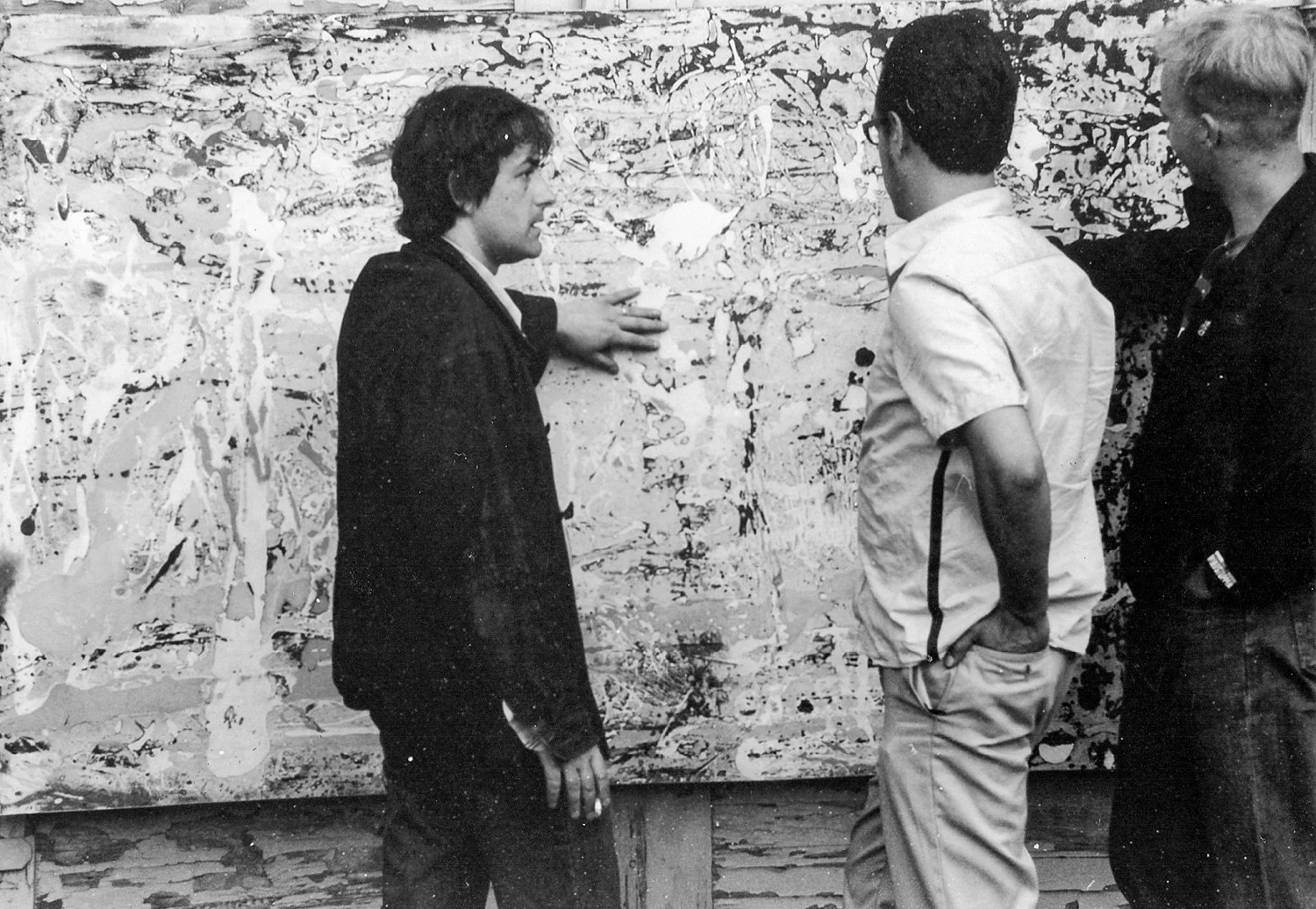
He applies the colors brought into the gesso in a gestural-expressive manner of painting, distributes them in numerous layers on his large-format canvases, a physically intensive process. But the actual work only arises after he has put the brush down. Now James starts searching for the inner life of the picture. Like a sculptor, he works through the layers of paint with a grinding machine - from the outside back into the work. James calls it the search for the inner identity of the picture. He exposes his works in an almost archaeological process, he digs and grinds through the layers of paint as if they were earth ages, traces of memory, traces of life sunk to the bottom of consciousness. Exactly where the surface of the final work, its boundary with the outside world - that is, what we face as viewers - is only determined in this process, which is carried out with extreme precision.
James is interested in the interplay of deliberate settings as they occur in the painting process and the hidden life of the material, which is only revealed when the image is artistically investigated with the grinding machine. For him, painting and commercial work are inseparable in the process of becoming an image; the image holds surprises in store. As a result, his work is an interplay of the artist's work and the material's own life.
James' process of finding images is related to his interest in boundaries, tensions and humanity, which he examines when different materials and forms come together. These interests permeates his abstract works, whether it is monochrome colored surfaces, elements rhythmically distributed over a level or landscape compositions in which he develops zones of transition that are worked out in great detail.
As an artist who was offered a place but ruled out attending Munich’s prestigious art academy, James does not want to be associated with any art movement. While comparisons to the gestural painting of abstract expressionism are obvious, James himself has the greatest admiration for Claude Monet, with whom he has a love of color and the shimmer of his surfaces - even if, unlike Monet, James would never paint outdoors. He prefers to paint and grind in the studio, all for himself and in close interaction with his work.
Support and Learn More
Studio Visits
Interested in seeing his workshop and works, then contact him via my website or contact A&M to arrange it, in Munich.